Asbestos Testing & Abatement in Keller, TX
Asbestos abatement is the licensed removal of asbestos-containing materials under negative-pressure containment, with regulated waste disposal and independent air clearance. Best Option Restoration of Keller surveys before demolition and abates to Texas DSHS and EPA rules. Surveys run $400–$1,200; abatement $1,500–$30,000, taking about two weeks from survey to clearance.
$400–$1,200 including accredited lab analysis.
$1,500–$30,000 by material, scope and disposal volume.
~2 weeks survey to clearance, including notification wait.
Survey any building built before ~1990 before disturbing it.
Texas DSHS licensing & notification · EPA NESHAP · OSHA · TCEQ-permitted disposal.
You vacate the area until air clearance passes.
When asbestos becomes your problem
Five situations, and the first two are the ones people don't see coming.
A water or fire loss in a pre-1990 home
Demolition is part of restoration. Cutting wet drywall or pulling duct wrap without a survey can release fibers through the whole house.
A renovation that opens walls, ceilings or flooring
Popcorn ceilings, 9×9 tile, mastic and joint compound are the usual finds, and all of them are commonly disturbed on day one.
Demolition of a commercial or public building
A survey is required by law in Texas regardless of what anyone expects to find.
Damaged or deteriorating material found in place
Crumbling pipe wrap or torn duct insulation is releasing fibers already, whether or not you touch it.
A property sale or lender requirement
Commercial lenders and buyers frequently require a survey and clearance documentation before closing.
Where it hides in a North Texas home
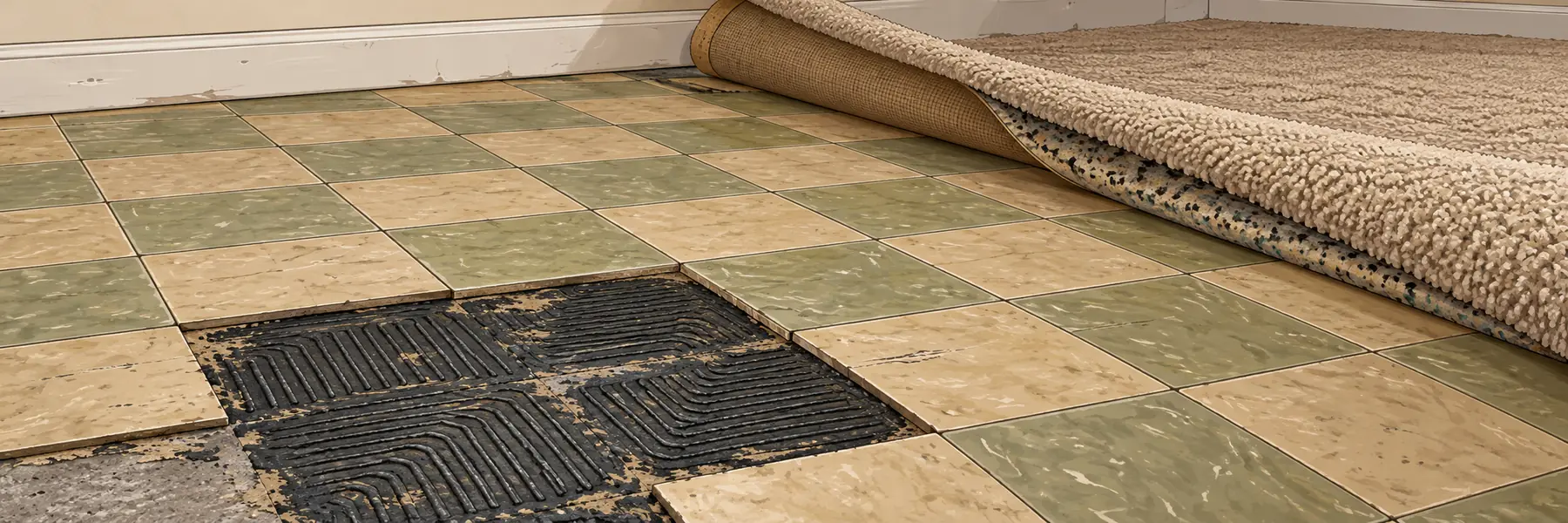
Asbestos went into more than 3,000 building products. You identify it by sampling, never by sight.
Our asbestos process, step by step
Seven phases. Nothing gets disturbed before phase one comes back from the lab, and nothing reopens before phase seven passes.
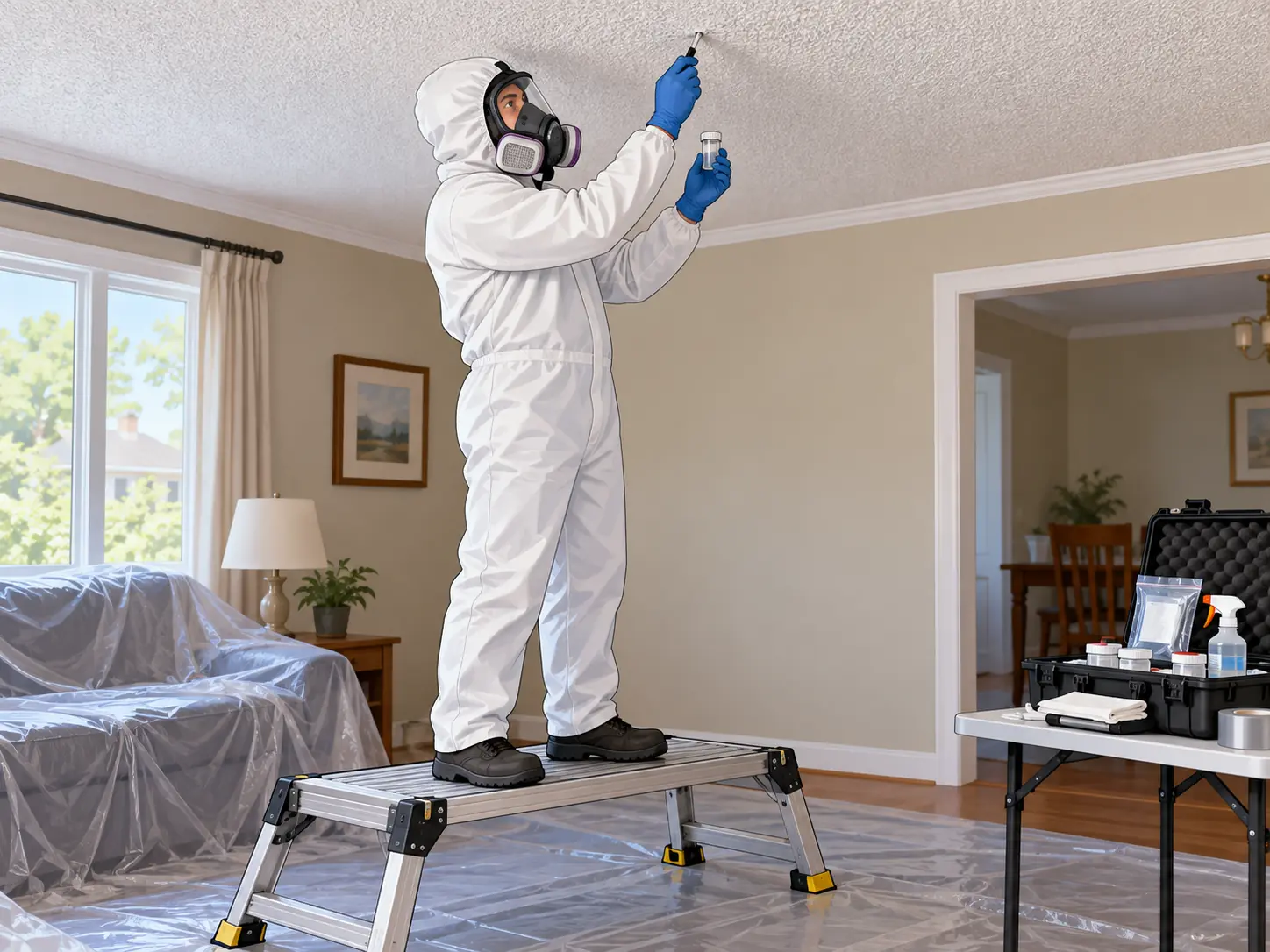
Survey & lab analysis
A licensed inspector samples suspect materials; an accredited lab analyzes them. Nothing is disturbed before results.
Results & decision
Negative and work proceeds normally. Positive and it's abatement or encapsulation, based on condition, location and whether the job will disturb it.
Notification & waiting period
Written notification to Texas DSHS at least 10 working days before abatement or demolition starts, where required. We file it; you don't.
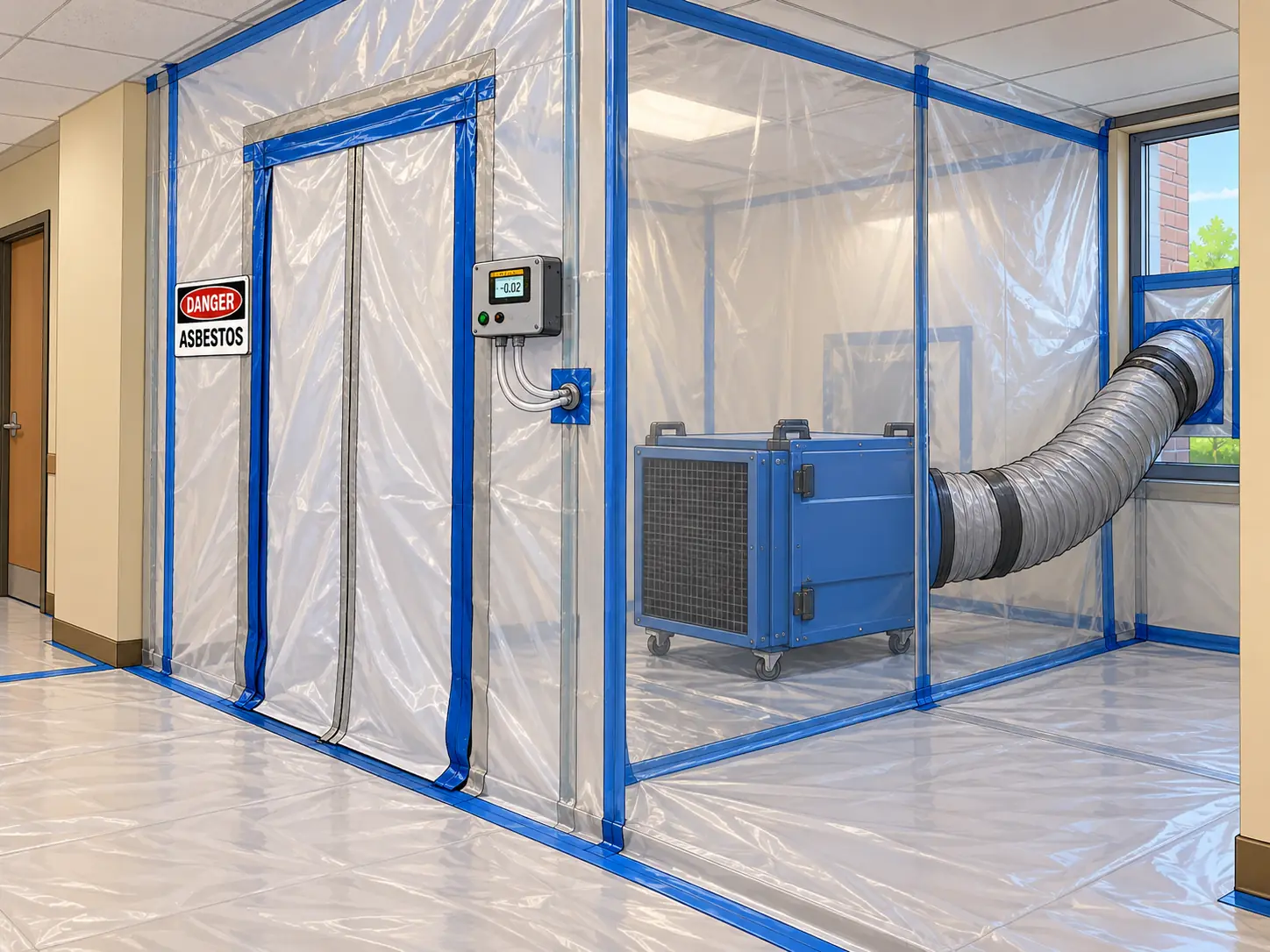
Containment & negative pressure
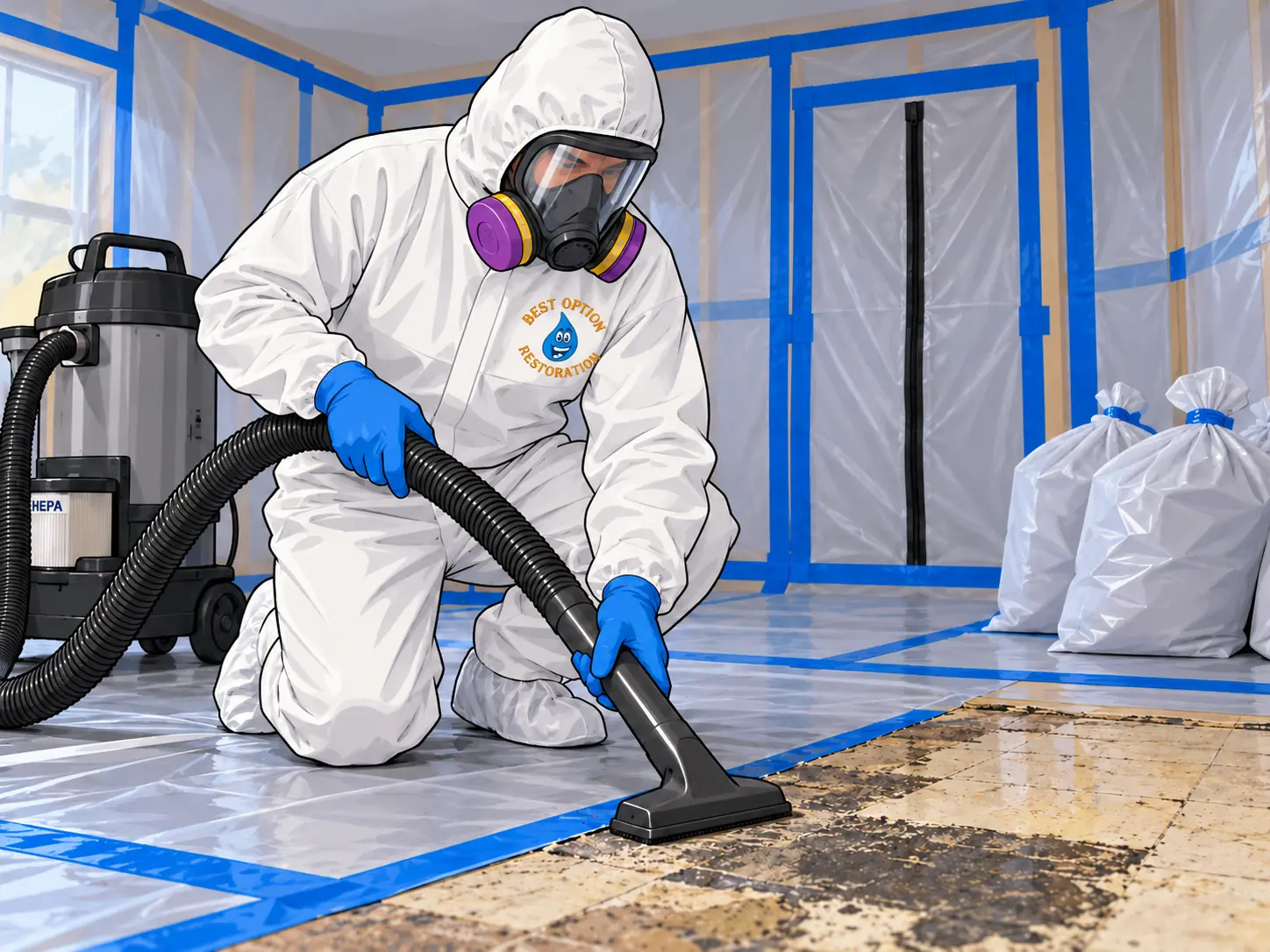
Polyethylene sheeting, HVAC isolated, continuous negative-pressure HEPA units, and a decontamination unit controlling entry and exit.
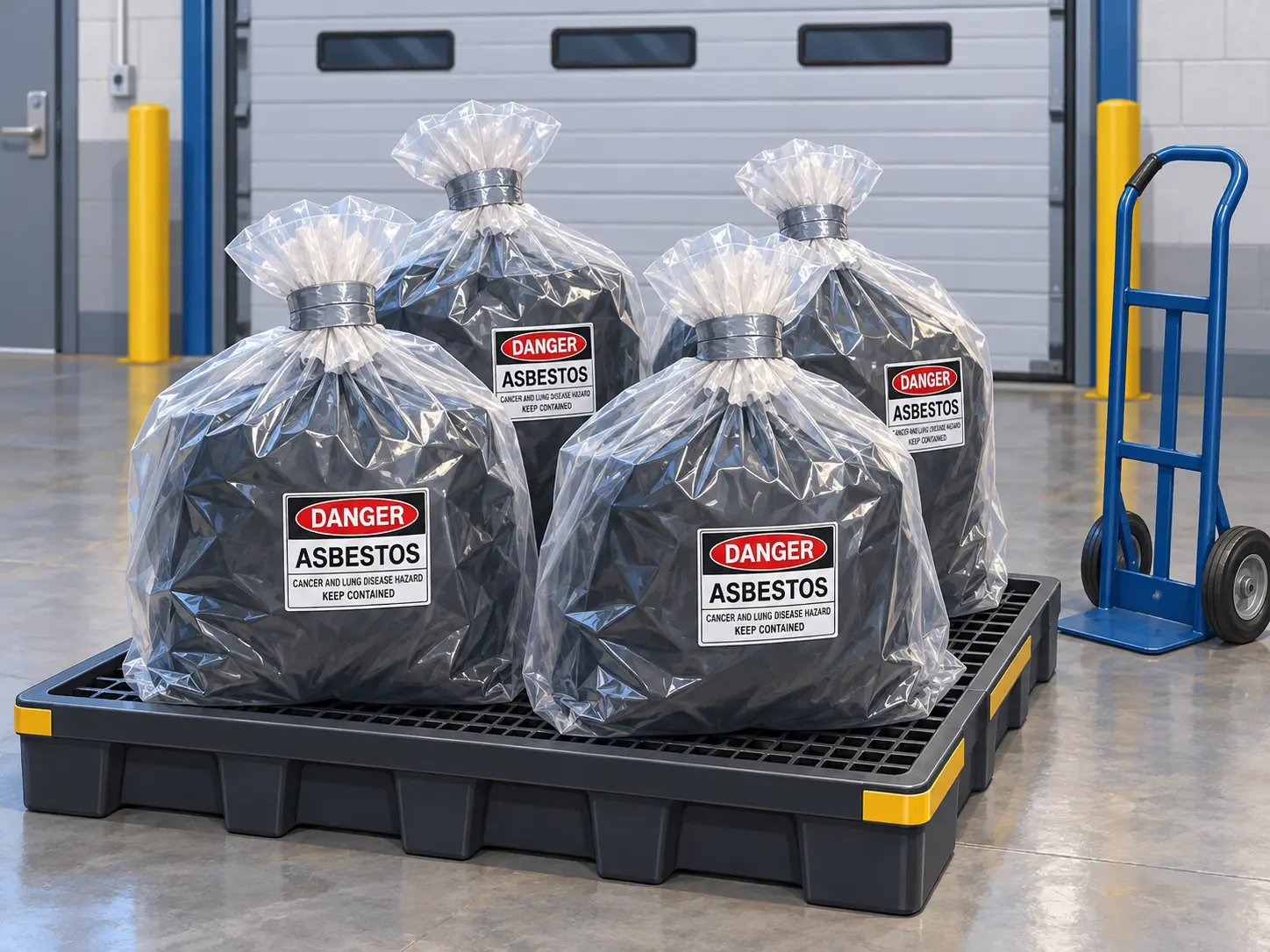
Wet removal
Material wetted with amended water to suppress fiber release, removed, and double-bagged in labeled six-mil bags while still wet.
Regulated waste disposal
Licensed hauler, permitted disposal facility, manifests handed to the property owner. Never a skip, never a dumpster.
Independent air clearance
Visual inspection and air sampling by an independent consultant. Containment stays up until it passes, then reconstruction begins.
Who is allowed to do asbestos work
Asbestos is the most heavily regulated material in restoration, with state and federal rules layered together. The structure mirrors Texas mold rules: the people who test should not be the people who remove.
Texas DSHS: licensing
Separate licenses for inspectors, consultants, abatement contractors, supervisors and air-monitoring technicians under the Texas Asbestos Health Protection Rules.
Texas DSHS: notification
Demolition of any public or commercial building, and abatement above the reportable quantities in one, needs written notice to DSHS at least 10 working days (not calendar days) before work starts. This is why a demolition schedule has to account for asbestos before the excavator is booked.
EPA NESHAP & AHERA: the federal layer
Requires surveys before demolition or renovation of commercial and public buildings, sets work practices, and governs schools under AHERA.
OSHA: worker protection
Exposure limits, respiratory protection, medical surveillance and training for anyone working with asbestos. This is why crews look the way they do.
One nuance worth knowing: Texas rules permit an owner-occupant to work on their own single-family home. That's a legal permission, not a safety opinion, and it doesn't extend to rentals, commercial buildings or public buildings.
Our licenses & certifications
Definitions, in one line each
ACM: asbestos-containing material, meaning material with more than 1% asbestos by lab analysis.
Friable material can be crumbled by hand pressure, so it releases fibers easily; non-friable is bound in a matrix.
Abatement is licensed removal; encapsulation seals material in place where removal isn't necessary.
Amended water is water with a surfactant added, so it penetrates and wets fibers rather than beading off.
Air clearance is post-abatement sampling proving airborne fiber concentrations are below the regulatory threshold.
What asbestos work costs in DFW
Typical prices from our northeast Tarrant County projects. Independent clearance testing is billed separately by the consultant.
On coverage: when asbestos is disturbed by a covered loss (a burst pipe soaking duct wrap, fire damage to a textured ceiling), abatement is often payable as part of the repair, sometimes through ordinance-or-law coverage. Removing asbestos found during a voluntary renovation generally isn't covered, because it's an improvement rather than a loss.
We work with your insurance company
We bill your insurer directly when abatement is part of a covered loss. You pay your deductible. Hablamos español.
Don't see your insurer? We work with them too. Just ask.
If you think you've disturbed asbestos
Six steps. Stopping is more important than cleaning.
Stop work immediately and get everyone out of the area.
Turn off the HVAC. It will carry fibers through the whole building.
Close doors and seal the doorway with plastic and tape if you can do it from outside.
Don't sweep, vacuum or dust. All three re-aerosolize fibers.
Bag the clothes you were wearing separately; don't run them through the family wash.
Call for a survey and, if positive, a licensed cleanup. Photograph it first.
Asbestos FAQs
Do I need an asbestos survey before renovating?+
For any building constructed before about 1990, yes, before disturbing walls, ceilings, flooring or insulation. Demolition or renovation of commercial and public buildings in Texas requires a survey by law regardless of age. For a private home it isn't always mandated, but a survey costs a few hundred dollars and disturbing asbestos without knowing turns a small project into a regulated cleanup.
Where is asbestos found in a house?+
The common locations in North Texas homes are 9×9 vinyl floor tiles and their black mastic, sheet-vinyl backing, popcorn and textured ceilings, pipe and duct wrap, HVAC duct tape and mastic, cement siding and roofing, joint compound and some plaster, and vermiculite attic insulation. It was used in more than three thousand building products, so identification is by sampling rather than by sight.
Is asbestos dangerous if you don't disturb it?+
Asbestos is hazardous when fibers become airborne and are inhaled. Material that's intact, sealed and undisturbed is generally low risk, which is why encapsulation or managed-in-place is a legitimate option. The risk appears when it's sanded, drilled, cut, scraped, torn out or damaged by water or fire, which is exactly what a renovation or a loss does.
How much does asbestos removal cost in Texas?+
A sampling survey typically runs $400 to $1,200. Small-scope abatement such as one room of floor tile is usually $1,500–$4,000, popcorn ceiling removal in a single room $2,000–$5,000, and whole-house or attic vermiculite abatement $10,000–$30,000. Containment complexity, material type and disposal volume drive the number more than square footage alone.
Can I remove asbestos floor tile myself?+
Texas rules allow an owner-occupant to work on their own single-family home, but that permission isn't a recommendation. Dry-scraping tile or mastic releases fibers into the house, ordinary vacuums pass fibers straight through the exhaust, and the waste can't lawfully go in household rubbish. Contaminating a home you live in isn't a saving. Any rental, commercial or public building requires a licensed contractor.
How long does asbestos abatement take?+
Small-scope abatement is typically one to three days of work, plus one to two days for air clearance results. Larger projects run one to two weeks. Where notification applies, add the 10-working-day Texas DSHS notice period before work can begin, so plan on roughly two weeks from survey to clearance on a normal residential project.
Do I have to leave my house during abatement?+
Yes for the affected area, and usually for the whole home on anything beyond a very small, well-isolated scope. The work area is under negative pressure and sealed, and re-entry isn't permitted until air clearance passes. On a covered insurance loss, additional living expense coverage often pays for temporary accommodation during that period.
Is asbestos abatement covered by insurance?+
When asbestos is disturbed by a covered loss (a burst pipe soaking asbestos-containing duct wrap, or fire damage to a textured ceiling), abatement is often covered as part of the repair, sometimes through ordinance-or-law coverage. Removing asbestos discovered during a voluntary renovation is generally not covered, because it's an improvement rather than a loss.
Who is licensed to do asbestos work in Texas?+
Asbestos work in Texas is licensed through the Department of State Health Services, with separate licenses for inspectors, consultants, abatement contractors and air-monitoring technicians. As with mold, the inspection and clearance side should be independent of the contractor performing the removal. Ask for license numbers and verify them before anyone opens a wall.
Renovating a pre-1990 building?
Survey first. A few hundred dollars now is cheaper than a regulated cleanup and a stopped project later.
Asbestos services near you
Surveys and licensed abatement across every community we serve in northeast Tarrant and south Denton counties.
This page is not medical or legal advice; regulatory thresholds change and your project's requirements should be confirmed with the relevant agency. Reviewed by Jonathan Dempsey, owner and lead project manager, TDSHS Asbestos Abatement Contractor · Published September 7, 2026 · Last reviewed October 16, 2026 · Cost ranges reflect our own DFW projects and are not a quote.