
Sewage & Biohazard Cleanup in Keller, TX
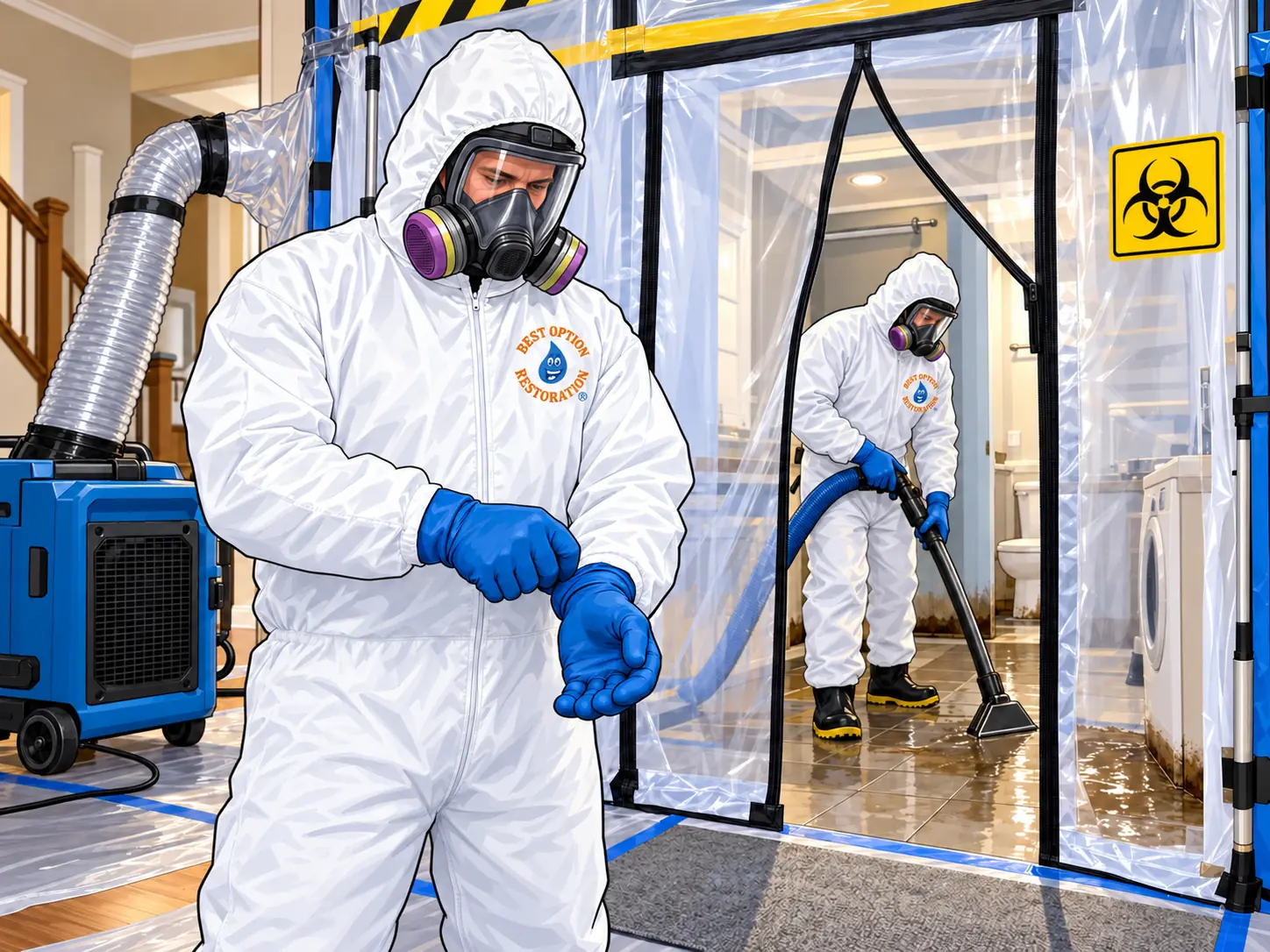
Sewage backup cleanup is Category 3 work: grossly contaminated water requiring containment, removal of every porous material it touched, and EPA-registered disinfection. Best Option Restoration of Keller responds 24/7 with IICRC-certified crews in full PPE. Most cleanups cost $1,500–$20,000 and take 1–3 days plus drying, with regulated-waste disposal documented for your carrier.
$1,500–$20,000 in DFW, by area and material removal.
1–3 days cleanup, 2–4 days drying, then rebuild.
Category 3: grossly contaminated, pathogenic.
ANSI/IICRC S500 and OSHA 29 CFR 1910.1030.
Needs a water-backup endorsement; often capped $5k–$25k.
24/7 dispatch, 60-minute target arrival.
What we respond to
All of it is Category 3 or regulated biohazard work, and none of it is a homeowner job.
Sewer or septic backup through floor drains and toilets
Often a main-line blockage or root intrusion. It recurs until the plumbing cause is found.
Toilet overflow past the trap
A tank-side leak is Category 1. A bowl overflow is at least Category 2, and Category 3 once it contains feces or comes from beyond the trap.
Street or creek flooding entering the structure
Ground and surface water carries fertilizer, fuel, animal waste and everything the storm drain held.
Clean water left standing for days
Category 1 degrades to Category 3 with time and temperature. A week-old supply leak is not a clean-water job.
Trauma, unattended death and hoarding remediation
Handled under OSHA bloodborne pathogen rules, discreetly, once law enforcement releases the scene.
Animal waste and rodent infestation cleanup
Common in attics and crawlspaces; the contamination and odor outlast the animals.
The three water categories
Category determines the entire scope: what gets cleaned, what gets removed, and what protection crews wear.
Why time changes the category
Category degrades with time. S500 sets no fixed clock (time, temperature and contact with building materials drive it) but clean water sitting in a warm North Texas house can degrade to Category 2 or 3 within a few days, which is why a delayed response changes the scope from drying to demolition.
Our Category 3 cleanup process
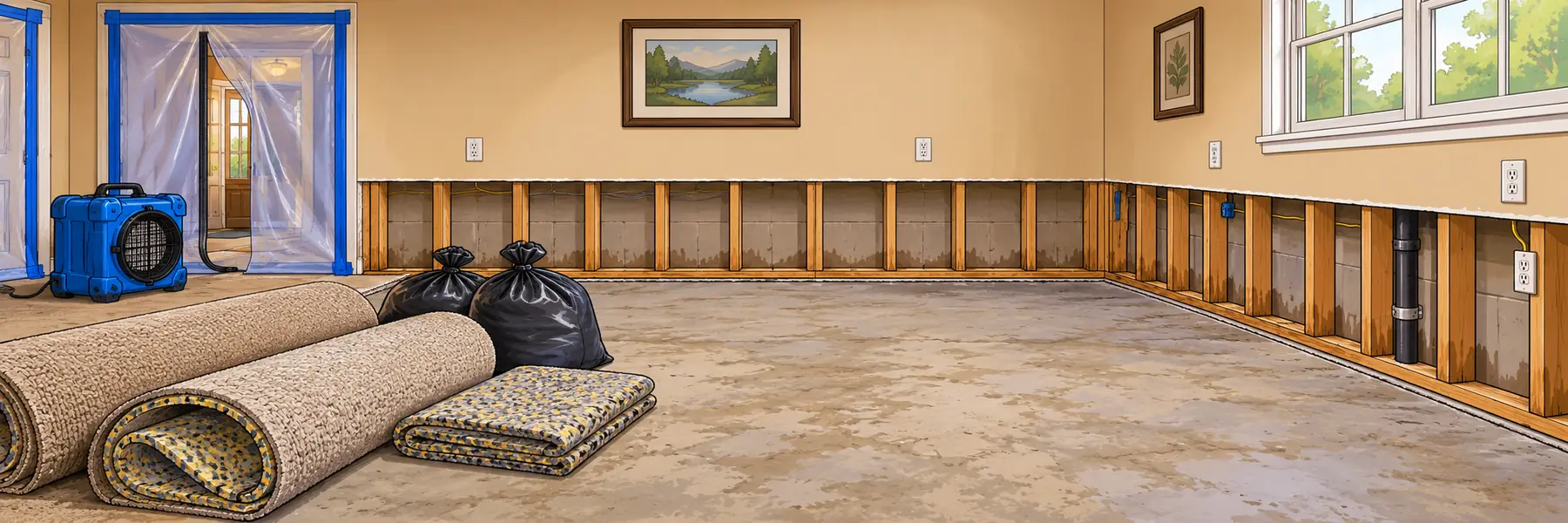
Seven phases. The order matters: containment before extraction, extraction before demolition, disinfection twice.
Evacuate & stop the source
People and pets out, water off, electricity to wet areas off, and the plumbing cause identified so it doesn't recur mid-job.
Containment & PPE
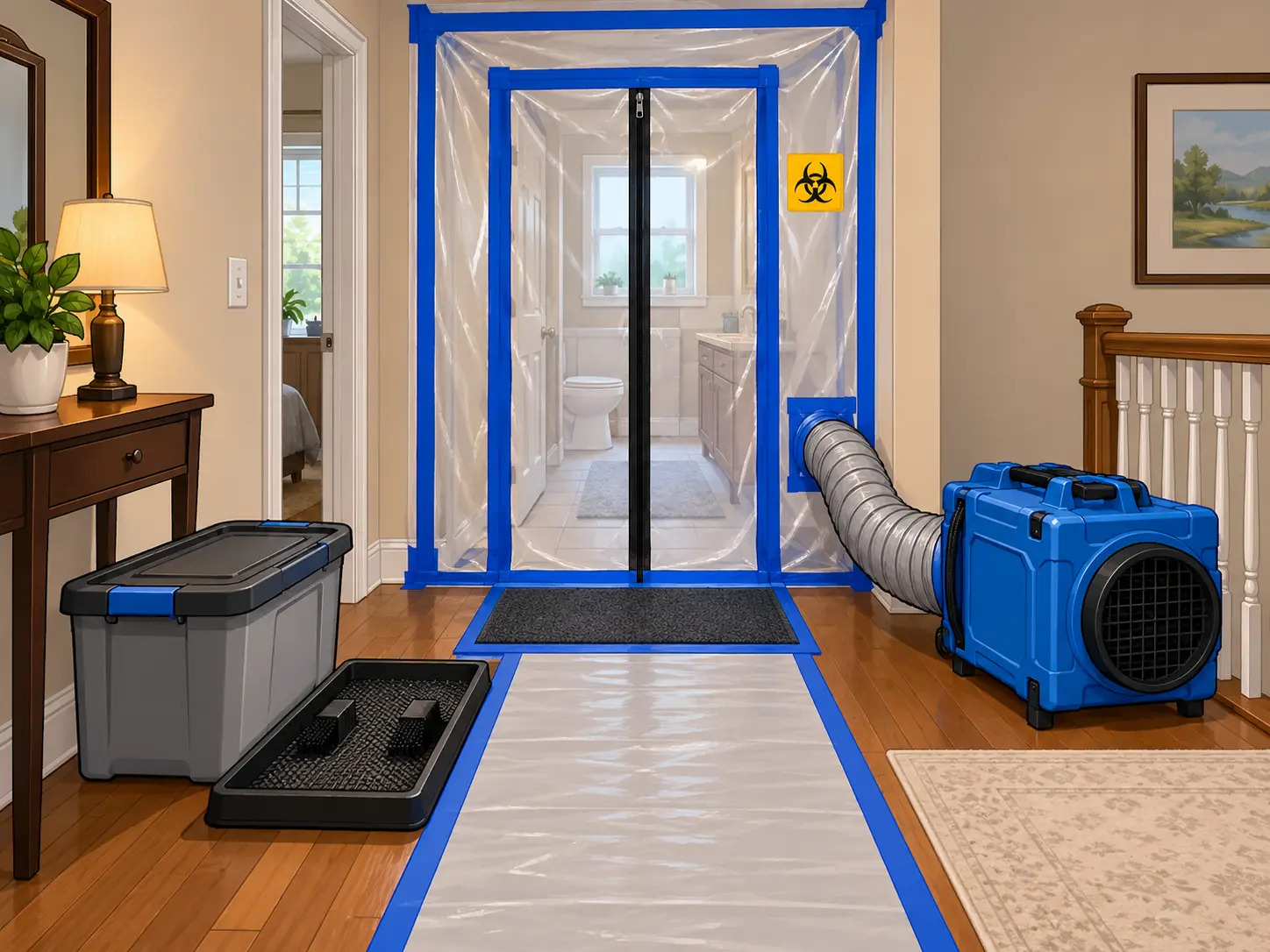
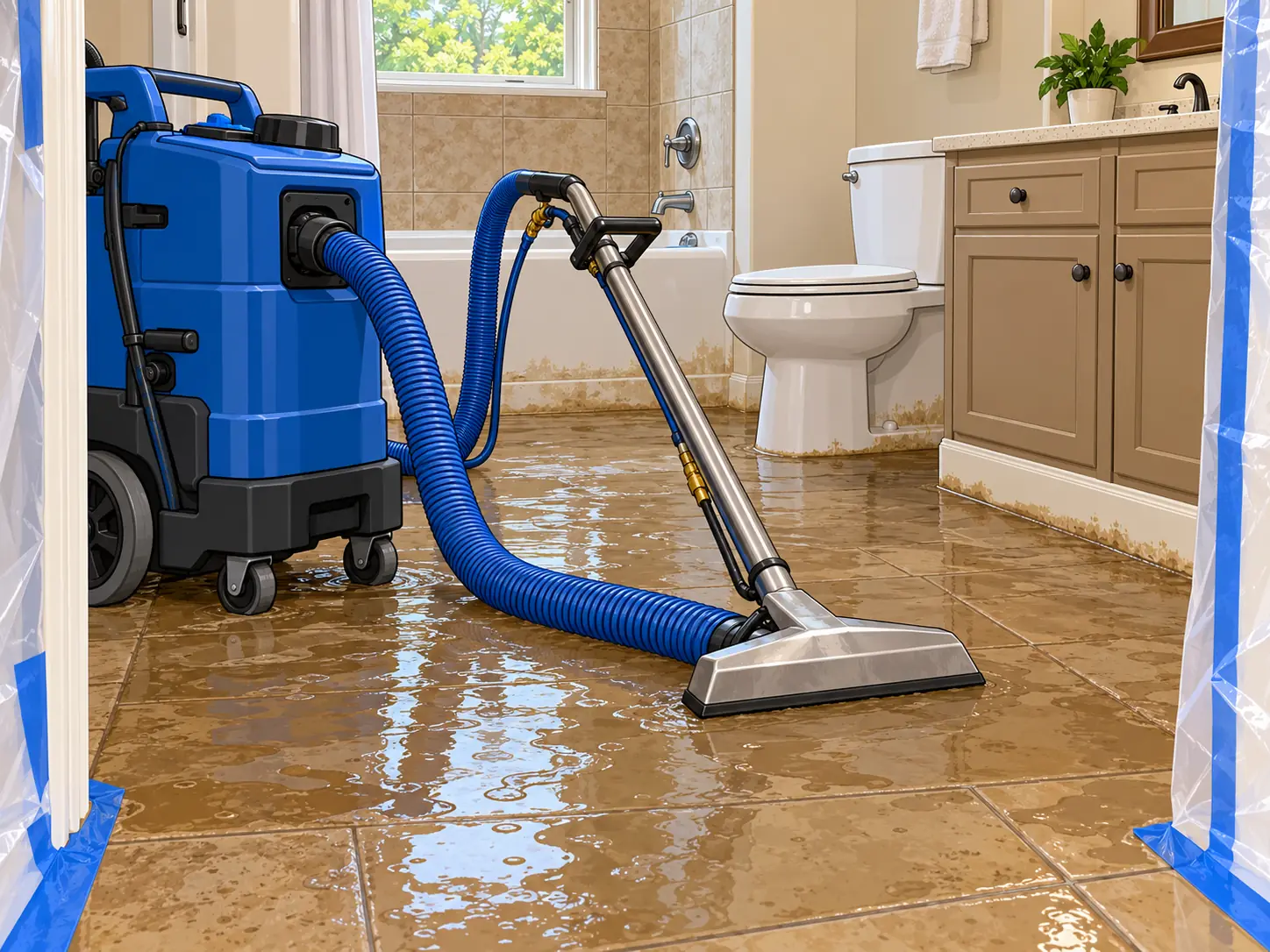
Sealed negative-pressure containment with HEPA filtration, HVAC isolated, crews in full protective equipment.
Extraction & debris removal
Contaminated water and solids extracted with dedicated equipment and disposed of as regulated waste, never down a household drain.
Porous material removal
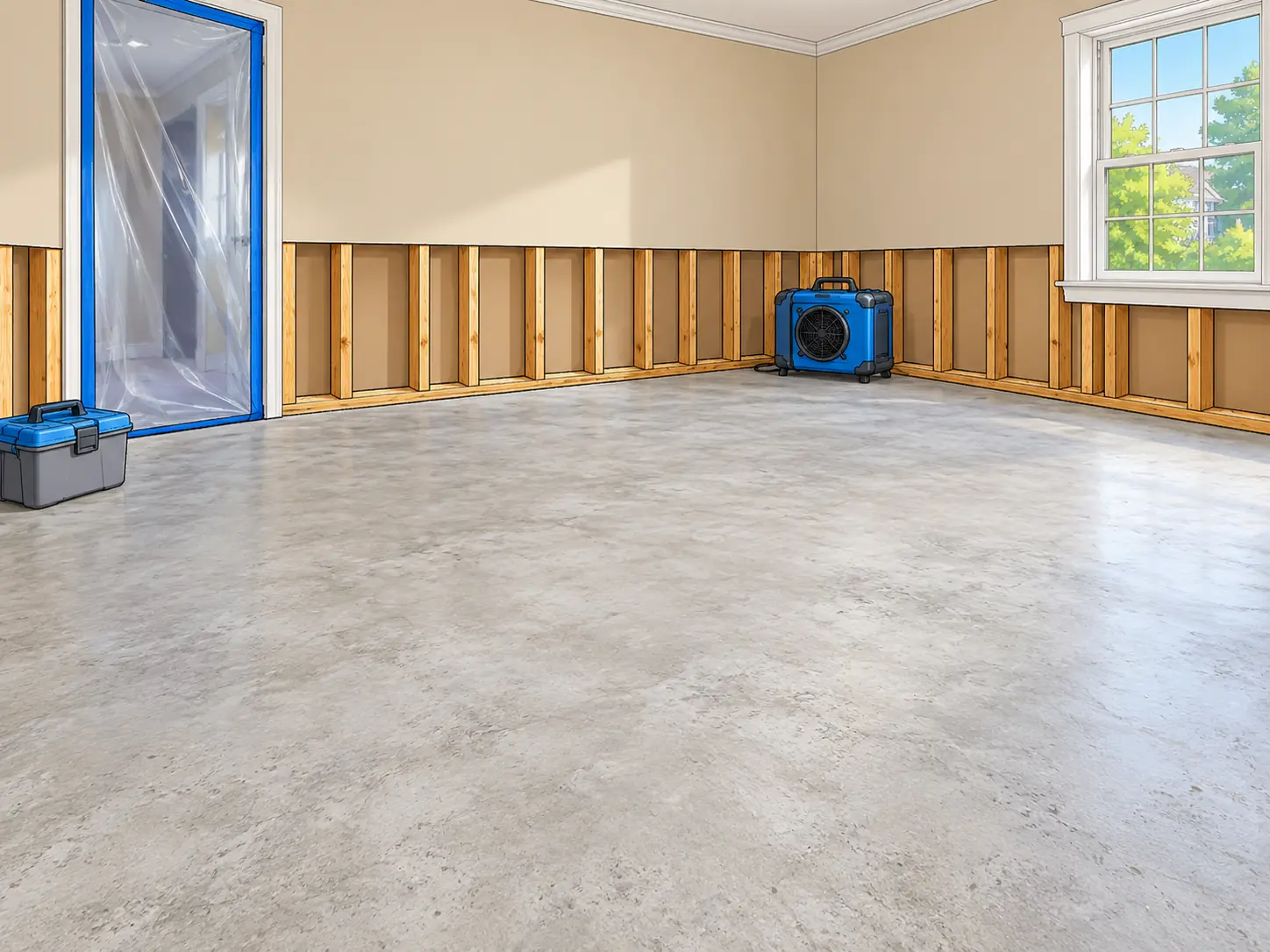
Carpet, pad, drywall, insulation and particleboard cut out and bagged. Porous material touched by sewage cannot be disinfected in place.
Clean & disinfect
Framing, subfloor and hard surfaces cleaned then treated with EPA-registered disinfectant at label dwell time: twice, before and after drying.
Dry & deodorize
Dried to a documented dry standard with HEPA scrubbing running throughout, then source-level odor treatment. No fragrance masking.
Verification & documentation
Post-cleaning verification, moisture logs and disposal records compiled for your carrier, or a landlord, buyer or property manager.
What governs biohazard work
Three rule sets apply to a Category 3 or biohazard job, and all three exist because this work is hazardous to the people doing it.
ANSI/IICRC S500: the scope rule
Defines the water categories and, critically, treats porous materials contacted by Category 3 water as non-restorable. That's why the carpet leaves rather than gets cleaned.
OSHA 29 CFR 1910.1030: the crew rule
The bloodborne pathogen standard: exposure control plan, PPE and training for anyone working a trauma or death scene, plus hepatitis B vaccination offered to every exposed worker.
TCEQ & local disposal rules: the waste rule
Contaminated water and regulated medical waste have to be transported and disposed of lawfully, with manifests. Not to a dumpster, not down a drain.
If a sewage loss also produced mold, common when a backup sat for days, Texas mold licensing kicks in at 25 contiguous square feet or more and an independent assessor writes that protocol. We'll tell you when you've crossed into that and bring in licensed mold professionals for that part of the job.
Our licenses & certifications
Definitions, in one line each
Category 3 water is grossly contaminated water that may contain pathogenic or toxigenic agents.
Biohazard is any biological material that presents a risk to human health: blood, bodily fluids, sewage, animal waste.
Flood cut is drywall removed to a set height, typically 12–24 inches above the water line, to reach the wet cavity.
Dwell time is how long a disinfectant must stay wet on a surface to actually work; skipping it is the most common failure.
Regulated waste is contaminated material that must be manifested and disposed of through a licensed facility.
What sewage cleanup costs in DFW
Typical costs from sewage jobs in our area. Reconstruction of removed flooring and drywall is scoped separately.
Coverage is the thing to check first. Sewer and drain backup is typically not covered by a standard Texas homeowners policy. It needs a water-backup endorsement, usually capped between $5,000 and $25,000. If a municipal main caused the backup, the city may accept liability as a separate claim. We document the cause either way, because that documentation is what determines who pays.
Get out and call 911 if you notice any of these
Once everyone is safe, call us. We'll take it from there.
- You smell gasLeave now. Don't flip switches.
- Sparks or a wet breaker panelStay out of the water.
- A sagging or bulging ceilingIt can come down without warning.
- Smoke, fire or structural crackingGet everyone outside first.
We work with your insurance company
We bill your insurer directly and send your adjuster the cleanup and disposal records. You pay your deductible. Hablamos español.
Don't see your insurer? We work with them too. Just ask.
Before we arrive
Six things, and five of them are "don't".
Get everyone, especially children and pets, out of the affected area and keep them out.
Stop using every water fixture in the house: more use means more backup.
Turn off the HVAC. Running it pulls contaminated air through the whole house.
Don't shop-vac it, mop it, or spray bleach. All three spread it.
Photograph from the doorway for the claim. Don't wade in for a better angle.
Don't walk from the wet area onto clean carpet. Shoes carry it everywhere.
Sewage & biohazard FAQs
Is sewage backup in a house dangerous?+
Yes. Sewage is Category 3 water: grossly contaminated water that can carry E. Coli, salmonella, hepatitis A, norovirus and parasites. Risk comes from contact, from contaminated dust once material dries, and from aerosolized droplets. Keep people and pets out, don't run the HVAC, and don't attempt to clean it with household products.
What is Category 3 water?+
Category 3 is the IICRC S500 classification for grossly contaminated water containing pathogenic or toxigenic agents: sewage backups, toilet overflows past the trap, flooding from rivers or streets, and any water that has sat long enough for microbial growth. Category 1 is clean supply-line water and Category 2 is significantly contaminated water such as washing-machine discharge; both can degrade to Category 3 with time and temperature, often within a few days.
Can I clean up sewage myself?+
A small toilet overflow of clean water on a hard, sealed floor can be handled with gloves and disinfectant. Actual sewage, anything that reached carpet or drywall, and anything over a few square feet should not be. Cleaning it without containment aerosolizes pathogens through the home, a shop vacuum spreads contamination through its exhaust, and porous materials that contacted sewage can't be disinfected in place.
How much does sewage cleanup cost?+
Most residential sewage cleanups in DFW run $1,500 to $20,000. A contained bathroom backup on tile is typically $1,500–$4,000; a backup that reached carpeted living space is $4,000–$10,000; a whole-floor or crawlspace event with extensive material removal exceeds $12,000. Cost is driven by affected square footage and how much porous material must be removed and rebuilt.
Does insurance cover sewage backup?+
Usually only if you carry a water-backup or sewer-backup endorsement, which is a separate add-on on most Texas homeowners policies and commonly capped at $5,000 to $25,000. Standard policies frequently exclude backup through sewers and drains. If a municipal main caused it, the city may accept liability: a separate claim from your homeowners policy.
Do I have to replace carpet and drywall after sewage?+
Yes for anything porous the sewage touched. IICRC S500 treats porous materials contacted by Category 3 water as non-restorable: carpet, pad, insulation, particleboard and drywall are removed rather than cleaned. Hard, non-porous surfaces such as tile, sealed concrete, framing and subfloor can be cleaned, disinfected and kept.
How long does sewage cleanup take?+
Extraction, removal and disinfection typically take one to three days, plus two to four days of drying. Reconstruction of removed flooring, drywall and trim usually follows within one to three weeks. A contained bathroom event can be cleaned and drying by the end of the first day.
Who do I call for an unattended death or trauma scene?+
After law enforcement releases the scene, a biohazard remediation contractor handles it: property owners and families aren't expected to. Work is performed under OSHA bloodborne pathogen rules with regulated medical waste disposal, discreet unmarked vehicles, and full documentation for the estate or carrier. We take these calls 24 hours a day and can coordinate directly with an executor or property manager.
Will the smell go away after sewage cleanup?+
Yes, when the contaminated material is removed rather than treated in place. Persistent sewage odor after a cleanup almost always means porous material was left behind, a wall cavity was never opened, or the structure was closed up before it reached a documented dry standard. Odor is treated at source with HEPA scrubbing and antimicrobial treatment, never masked with fragrance.
Standing sewage in the house right now?
Leave the area, stop using water, turn off the HVAC, and call. We dispatch 24/7 with a 60-minute target arrival.
Sewage & biohazard cleanup near you
24/7 across every community we serve in northeast Tarrant and south Denton counties.
This page is not medical advice; if you have had contact with sewage and develop symptoms, contact a physician. Reviewed by Jonathan Dempsey, owner and lead project manager, IICRC WRT/ASD · Published September 7, 2026 · Last reviewed October 16, 2026 · Costs shown are typical for our area, not a quote.