Fire & Smoke Damage Repair in Keller, TX
Fire and smoke damage repair in Keller, TX covers emergency board-up, soot removal, permanent odor elimination and full reconstruction. Best Option Restoration of Keller is an IICRC Certified Firm with FSRT and OCT technicians. Board-up happens the same day; most residential losses cost $3,000–$60,000 and take 3–12 weeks including rebuild, billed directly to your carrier.
$3,000–$60,000 in DFW, by residue type and rebuild scope.
1–3 weeks cleaning, 2–8 weeks rebuild.
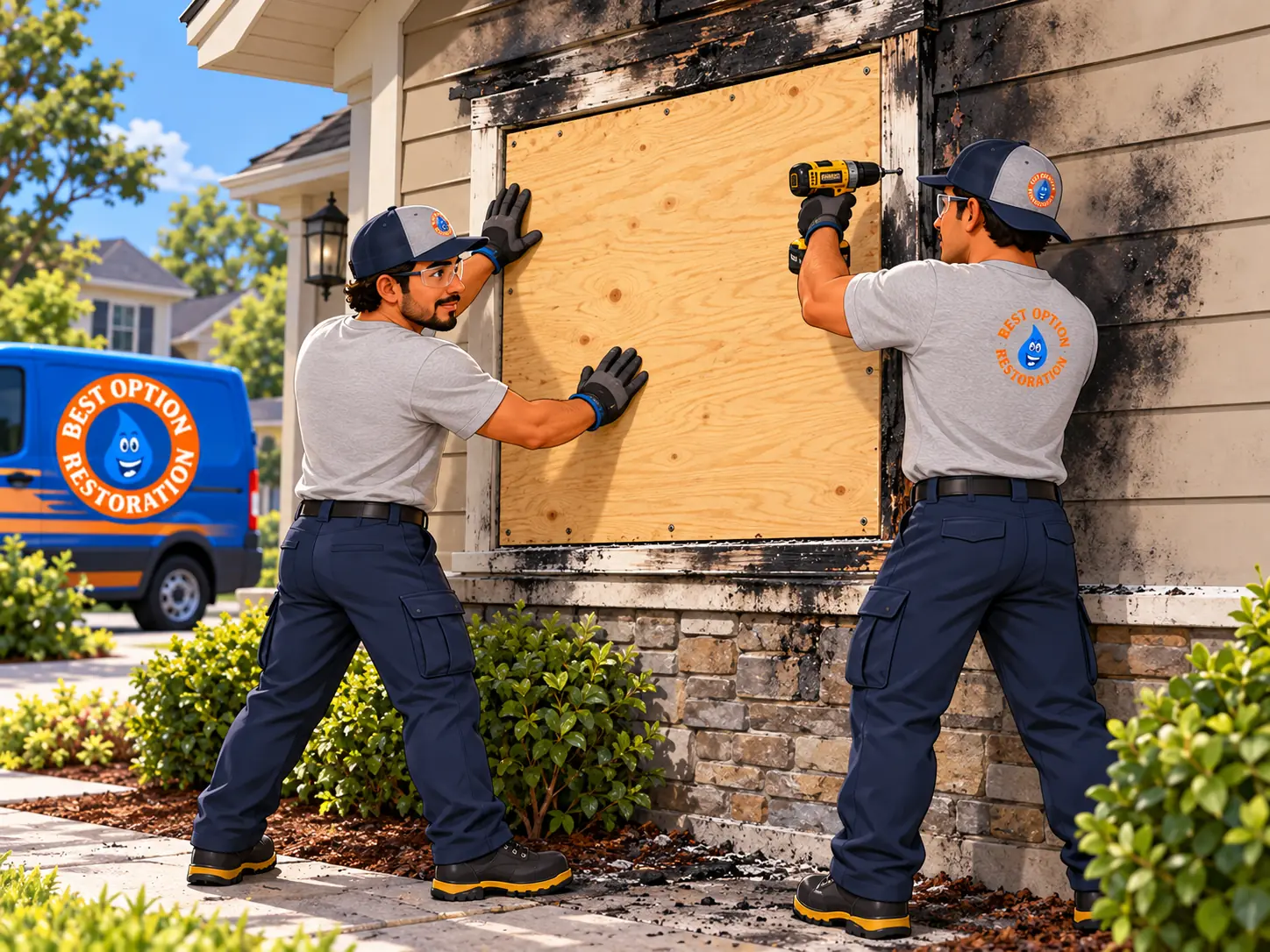
Same day, 24/7, before weather or entry adds to the loss.
ANSI/IICRC S700 fire and smoke damage restoration.
Fire is a covered peril on virtually every Texas policy.
Fire-hose water extraction and drying, to stop secondary mold.
The damage a fire leaves behind
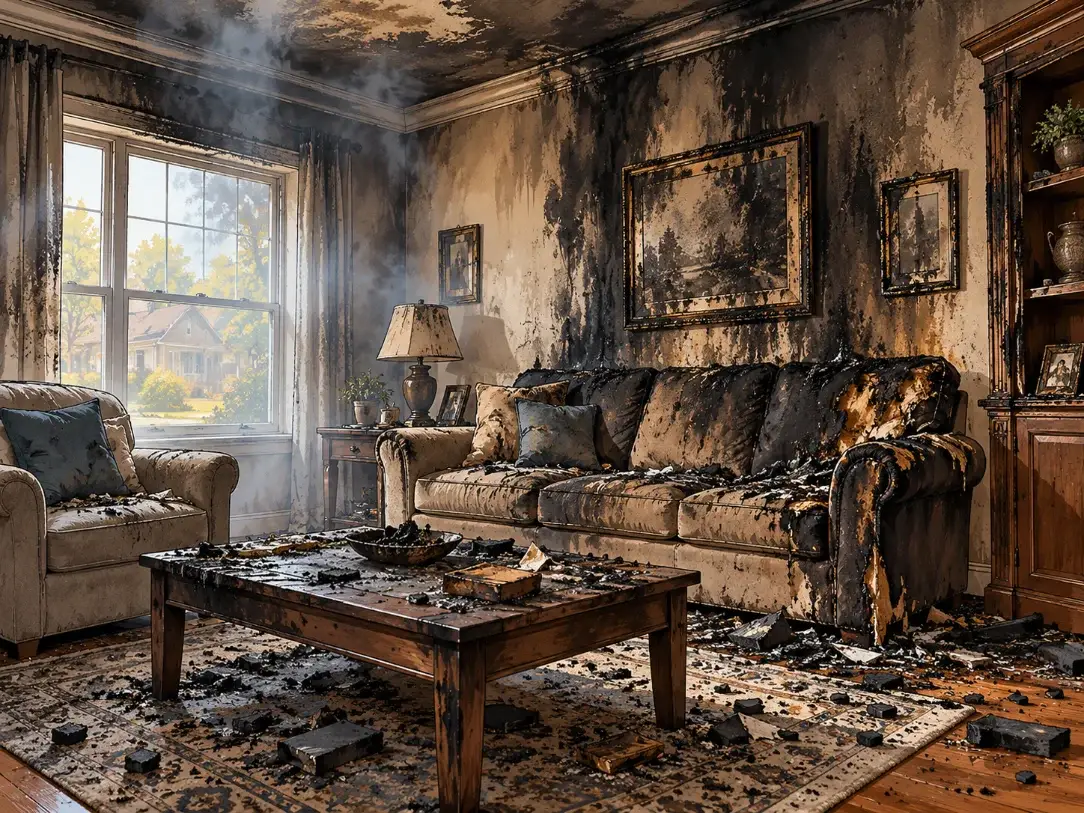
Flame damage is the visible part and often the smallest. Four other kinds of damage arrive with it.
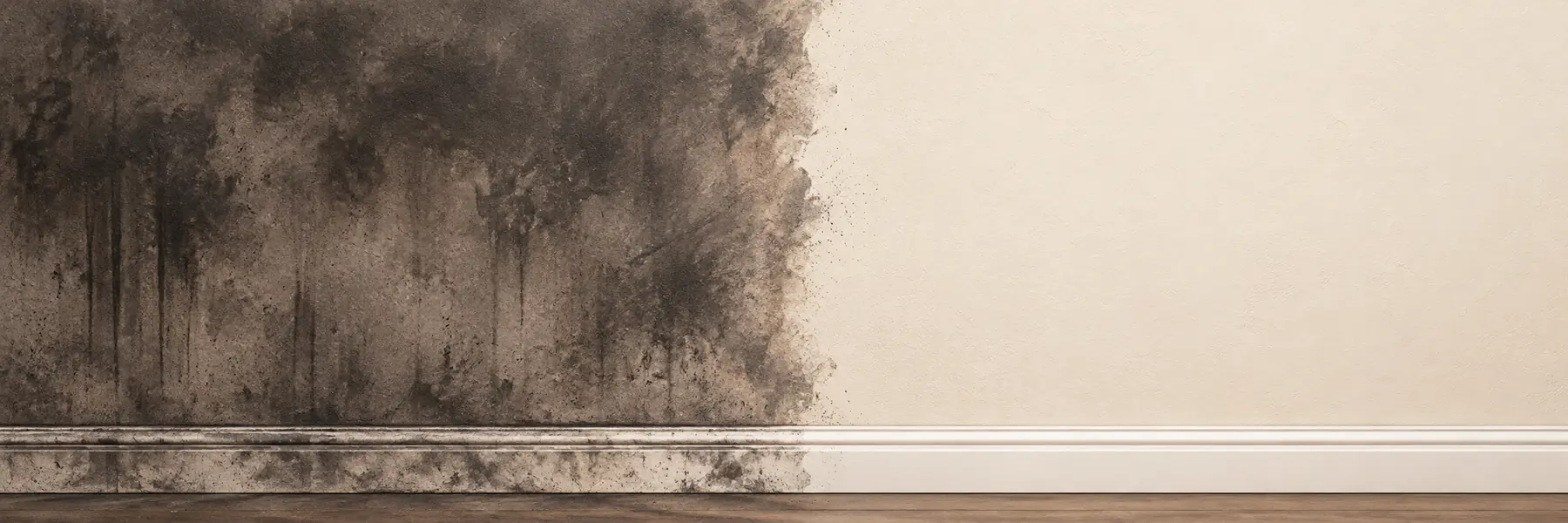
Acidic soot etching finishes by the hour
Soot corrodes metal, permanently yellows plastics and stains grout and marble. Delay is what turns cleanable into replaceable.
Smoke odor in rooms that never burned
Smoke travels through the HVAC and wall cavities, so a garage fire routinely leaves odor in an upstairs bedroom.
Thousands of gallons of suppression water
A fire loss is also a water loss. Undried, it becomes a mold claim on top of the fire claim within 24–48 hours.
Contaminated ductwork and air handler
The single most common reason odor reappears a month after a house was "finished".
Structural and electrical compromise
Charred framing loses load capacity and heat-damaged wiring insulation fails later. Both need assessment, not assumption.
Four smoke types, four chemistries
Identifying the residue is the first technical decision on the job, and using the wrong method sets the stain permanently.
Our fire restoration process, step by step
Eight phases from the night of the fire to the day you move back in: one crew, one scope, one point of contact with your carrier.
Board-up & stabilize
Openings boarded, roof tarped, property secured, utilities checked, suppression water extracted before it travels further.
Assessment & residue ID
We determine the smoke type, map affected assemblies and contents, and build the carrier documentation.
Water extraction & drying
Structural drying to a documented dry standard, so the fire claim doesn't become a mold claim.
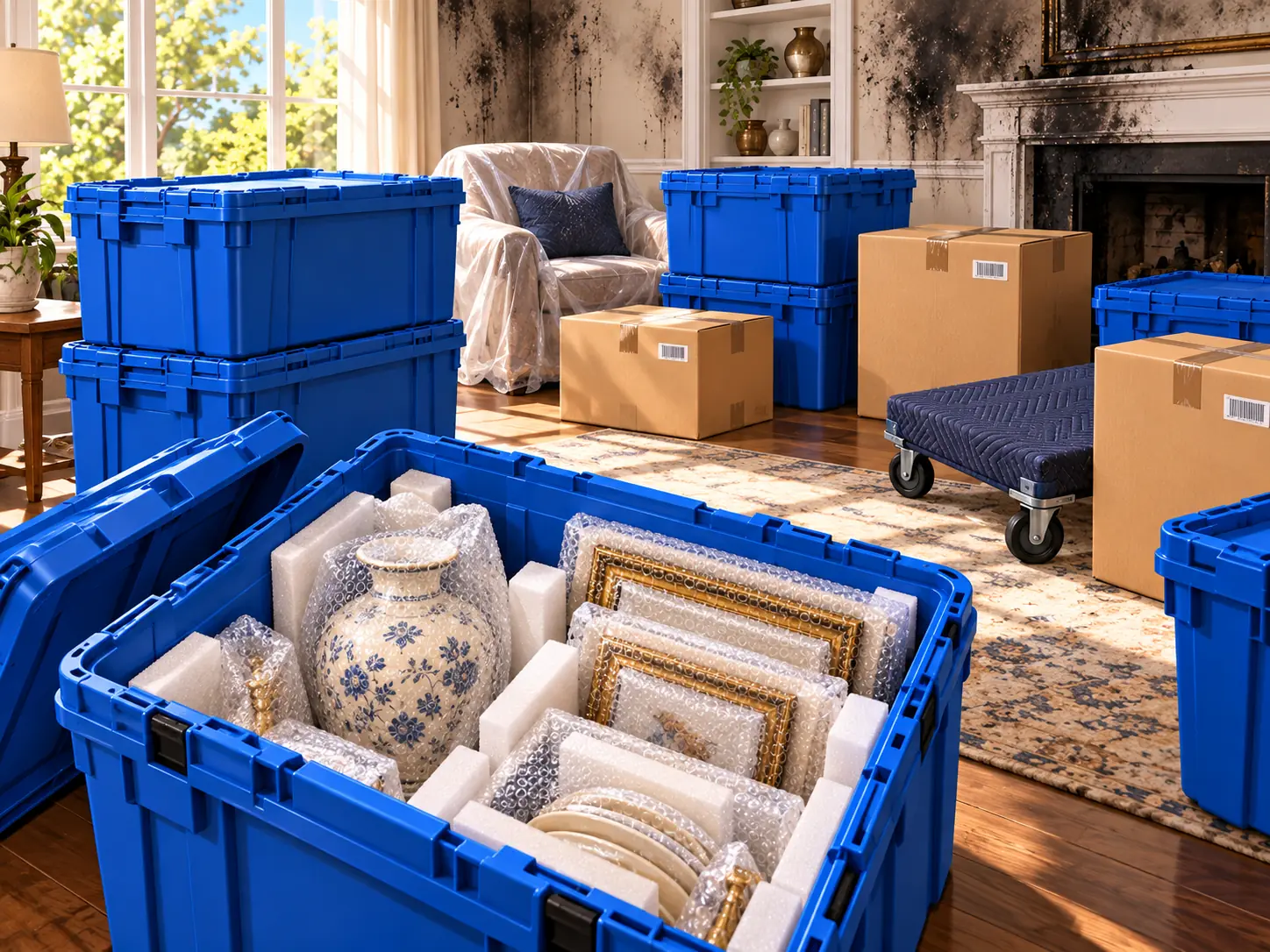
Contents pack-out
Inventoried, photographed, packed out and cleaned off site. Non-salvageable items documented before disposal.
Soot & residue removal
Chemistry matched to residue type, room by room, ceiling down. Charred framing cleaned or media blasted.
Odor elimination
HEPA scrubbing, hydroxyl or ozone, thermal fogging of porous assemblies, sealing where residue can't be reached. Never masking.
HVAC decontamination
Ducts cleaned or replaced and the air handler treated: the step most often skipped, and the reason odor returns.
Reconstruction
Drywall, insulation, flooring, trim, cabinetry, paint: back to pre-loss condition, under the same contract.
What governs fire restoration work
Texas doesn't license fire restoration the way it licenses mold work, which means the standard a company holds itself to is the only real differentiator. We work to ANSI/IICRC S700, the consensus standard for fire and smoke damage restoration, and to S500 for the water side of the loss.
Two other things apply on a Texas fire job. Reconstruction requires the appropriate municipal permits: Keller, Southlake and Fort Worth each have their own process, and we pull them rather than leaving it to you. And in older homes, disturbing charred materials can release lead paint (common before 1978) or asbestos (common before about 1990), so testing comes first.
Do not enter until released
The fire department controls the scene until it's released. After that, structural stability, live circuits and respirable soot are the risks. Ask for an escort to retrieve documents or medication.
Don't clean anything first
Household cleaners set soot stains permanently and push residue into porous surfaces. Photograph everything, touch nothing, and let the residue be identified before it's cleaned.
Our licenses & certifications
Definitions, in one line each
Soot is the acidic carbon residue left by incomplete combustion; it keeps damaging surfaces until it's removed.
Thermal fogging heats a deodorizing agent into a vapor that follows the same path smoke took into porous materials.
Hydroxyl generation neutralizes odor molecules and is safe to run in occupied spaces, unlike ozone.
Puff-back is soot blown through a home's ductwork by a misfiring furnace or boiler.
Pack-out means we inventory your belongings and move them to our facility for cleaning and storage.
What fire damage restoration costs in DFW
Typical numbers from fire jobs in our area. Reconstruction is scoped separately and included in the same carrier estimate.
Fire is a covered peril on virtually every Texas homeowners policy, including the suppression water and the smoke in unburned rooms. Most policies also pay additional living expenses while the home is uninhabitable, which is worth claiming from day one rather than week three. We write the scope in Xactimate and bill your carrier directly; you generally pay only your deductible.
Get out and call 911 if you notice any of these
Once everyone is safe, call us. We'll take it from there.
- You smell gasLeave now. Don't flip switches.
- Sparks or a wet breaker panelStay out of the water.
- A sagging or bulging ceilingIt can come down without warning.
- Smoke, fire or structural crackingGet everyone outside first.
We work with your insurance company
We bill your insurer directly and send your adjuster our smoke and soot documentation. You pay your deductible. Hablamos español.
Don't see your insurer? We work with them too. Just ask.
The first 24 hours after a fire
In order. Most of this list is about not making the loss worse.
Stay out until the fire department releases the property. Don't re-enter for belongings.
Call us for board-up before nightfall or rain. An open structure keeps accruing damage.
Open a claim and ask specifically about additional living expenses.
Photograph everything wide and close before anyone touches a surface.
Don't wipe soot, run the HVAC, or plug in anything heat-exposed.
Discard food and medication exposed to smoke or heat, after photographing it.

Fire & smoke damage FAQs
Can smoke smell be removed permanently?+
Yes, when odor is treated at source rather than masked. That means removing residue from every affected surface, cleaning or replacing HVAC ductwork, treating porous materials with thermal fogging or hydroxyl generation, and sealing charred framing that can't be fully cleaned. Odor that returns weeks later almost always means the HVAC system or a wall cavity was skipped.
Is it safe to enter my house after a fire?+
Not until the fire department releases the property and a professional has checked structural stability, electrical safety and air quality. Soot is acidic and respirable, wet drywall and charred framing can fail without warning, and suppression water may be in contact with live circuits. If you need documents or medication, ask for an escort rather than entering alone.
How much does fire damage restoration cost in Texas?+
Most residential fire losses in DFW run $3,000 to $60,000. Smoke cleaning in one or two rooms is typically $3,000–$9,000; a kitchen fire with structural involvement is $15,000–$35,000; a major multi-room loss with rebuild exceeds $40,000. Cost is driven by residue type, contents volume, HVAC involvement and how much has to be rebuilt.
Does homeowners insurance cover fire damage?+
Fire is a covered peril on virtually every Texas homeowners policy, including the water damage from firefighting and the smoke damage in unburned rooms. Most policies also pay additional living expenses while the home is uninhabitable. Arson by the insured and losses at a property vacant beyond the policy's stated period are the usual exclusions.
Should I clean the soot myself before you arrive?+
No. Soot is acidic and keeps etching metal, glass, grout and finishes the longer it sits, and household cleaners often set the stain permanently or drive residue deeper into porous surfaces. Wiping a wall before it's dry-sponged can turn a cleanable surface into one that must be replaced. Photograph everything and leave it.
How long does fire damage restoration take?+
Board-up happens the same day. Cleaning and deodorizing takes roughly one to three weeks depending on contents volume, and reconstruction typically runs two to eight weeks after that. A single-room smoke loss can be complete in ten days; a structural rebuild after a major fire commonly takes three to six months.
Can my belongings be saved after a fire?+
Most hard goods, and a surprising share of textiles, electronics and documents, can be restored. Ultrasonic cleaning handles hard contents, ozone chambers deodorize textiles, and specialist vendors recover documents and photographs. Items that absorbed heavy protein or fuel-oil smoke, and most food and cosmetics, are documented and disposed of.
What is the difference between wet smoke and dry smoke?+
Dry smoke comes from fast, high-temperature fires burning paper and wood: a dry, powdery residue that dry-sponges off relatively easily. Wet smoke comes from slow, smoldering, low-heat fires burning plastics and rubber: a sticky, smeary residue with a strong odor that needs solvent cleaning. Identifying which one you have determines the entire cleaning approach.
Do you handle the rebuild, or just the cleanup?+
Both, as a single scope. We board up, extract water, clean and deodorize, pack out and restore contents, then rebuild drywall, flooring, trim, cabinetry and paint. Keeping mitigation and reconstruction under one contract avoids the gap where a homeowner has a clean shell and nobody to put it back together.
House still open to the weather?
Board-up is the one thing that can't wait until morning. We run it 24/7 and bill it to your claim.
Fire damage repair near you
Board-up crews across every community we serve in northeast Tarrant and south Denton counties.
Reviewed by Jonathan Dempsey, owner and lead project manager, IICRC FSRT/OCT/WRT · Published September 7, 2026 · Last reviewed October 16, 2026 · Cost ranges reflect our own DFW projects and are not a quote; every scope is priced after an on-site assessment.