
Repairs & Reconstruction in Keller, TX
Restoration reconstruction is the rebuild that returns a property to pre-loss condition after water, fire, storm or mold damage. Best Option Restoration of Keller dries, cleans and rebuilds under one contract: drywall through cabinetry, permitted and scoped in Xactimate. Typical rebuilds run $2,500–$150,000 over 1 week to 6 months, with a written workmanship warranty.
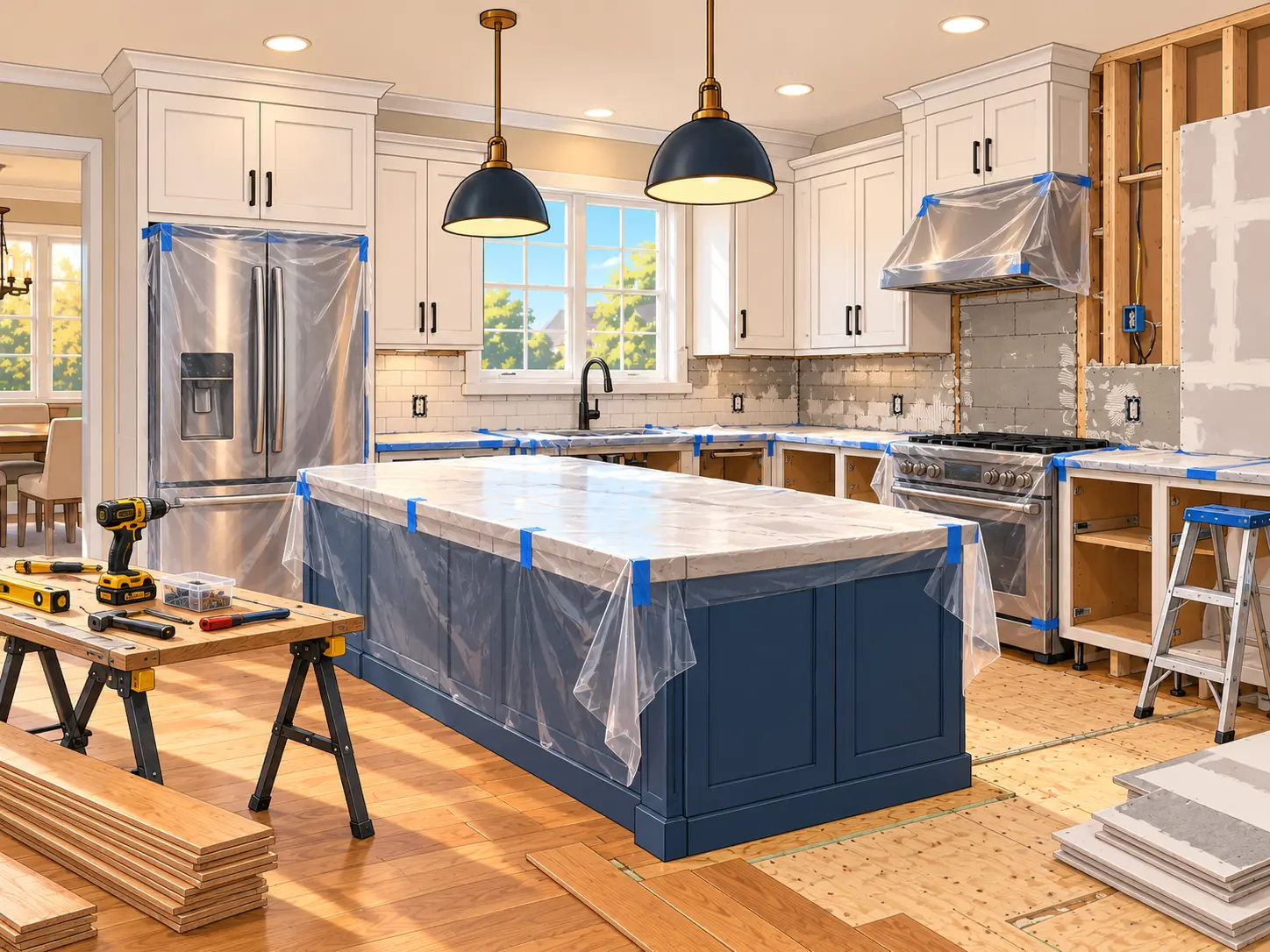
$2,500–$150,000 by scope, from one room to a full rebuild.
1–2 weeks a room; 3–6 months a whole home.
Moisture meets the dry standard and clearance has passed.
Xactimate line-by-line, matched to your policy.
Pulled through your city; inspections scheduled by us.
Written workmanship warranty; locally owned to honor it.
What we rebuild
Everything the mitigation removed, plus whatever was found behind it.
Structure: framing, subfloor, sheathing
Rotted plates, failed joists and delaminated subfloor. Usually the part the original estimate missed.
Insulation, drywall & texture
Insulation to current R-value, then drywall hung, floated and textured to match, not approximated.
Flooring: tile, LVP, hardwood, carpet
Including the transitions that get ugly when a discontinued product can't be matched.
Cabinetry, countertops & tile work
The long-lead items on any kitchen or bathroom rebuild, ordered early, not last.
Trim, doors, paint & fixtures
Painted to a natural break rather than spot-patched, because aged paint never matches a fresh coat.
Roofing, siding & exterior
Decking, shingles, siding, soffit and fascia after storm or fire, with a licensed roofing partner.
One contract vs two
The most consequential decision on a claim, and it's made in the first week.
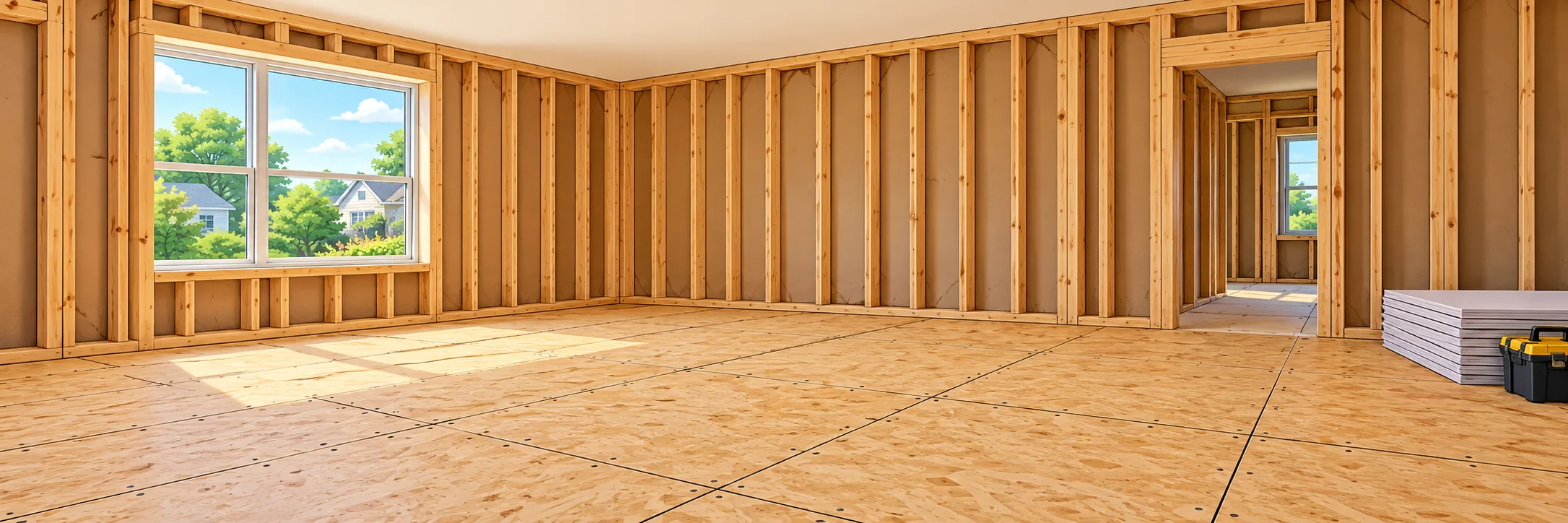
Our reconstruction process, step by step
Seven phases. Phase one is a gate, not a formality: closing up a wet assembly is how a second loss gets built into a house.
Confirm dry & cleared
Moisture readings meet the documented dry standard and any mold or asbestos clearance has passed. Nothing closes up before that.
Scope, estimate & approval
Xactimate line by line, matched to your policy, with material selections and allowances agreed before anything is ordered.
Permits & code review
Permits pulled through your city and code upgrades identified early, so ordinance-or-law coverage gets claimed rather than absorbed.
Structure & rough-in
Framing, subfloor and sheathing repairs, then plumbing, electrical and HVAC rough-in, inspected before anything is concealed.
Insulation, drywall & texture
Insulation to current R-value, drywall hung, taped, floated and textured by hand to match the existing finish.
Finishes & fixtures
Flooring, trim, doors, cabinetry, countertops, tile, paint, fixtures and appliances, with transitions handled deliberately where a match no longer exists.
Punch list, inspection & warranty
Walkthrough punch list completed, final municipal inspections passed, written workmanship warranty issued with the closing documents.
What governs a rebuild in North Texas
Texas doesn't license general remodeling contractors statewide, so the accountability comes from permits, trade licenses and the contract. Three things are worth knowing before you sign anything.
Permits are per city, and they matter at resale
Keller, Southlake, Fort Worth and each surrounding city run their own process. Unpermitted structural, electrical or plumbing work is a standard inspection finding and a common reason a sale gets renegotiated.
Code upgrades and ordinance-or-law coverage
A repair can trigger current-code requirements an older house never met: arc-fault protection, insulation values, egress. Ordinance-or-law coverage pays for that, but only if it's identified and claimed.
You choose the contractor
Your insurance company may suggest a contractor it works with, but you're not required to use one. And a contractor may not lawfully pay, waive or rebate your deductible in Texas. That offer is a warning, not a discount.
Trade work is separately licensed: plumbing and electrical are performed by state-licensed trades under permit, and roofing is coordinated with a licensed roofing partner. Ask any contractor to name who's doing each and verify it.
Our licenses & credentials
Definitions, in one line each
Mitigation stops and limits the damage; reconstruction puts the building back.
Pre-loss condition is the standard insurance restores to. The same, not better.
Xactimate is the estimating platform carriers price restoration scopes in, line by line.
Supplement is an additional claim submission for damage the original estimate didn't include.
Ordinance-or-law coverage covers upgrades the building code requires once the repair starts.
What reconstruction costs in DFW
Typical rebuild costs from our local projects. Upgrades you choose are priced as a separate allowance.
On a covered claim you generally pay your deductible plus any upgrades you choose. Hidden damage found once a wall is open (rotted subfloor, failed framing, outdated wiring) goes to the carrier as a supplement rather than to you as a change order. That distinction is most of what separates a restoration contractor from a remodeler on an insurance job.
We work with your insurance company
We bill your insurer directly and send your adjuster the rebuild scope and photos. You pay your deductible. Hablamos español.
Don't see your insurer? We work with them too. Just ask.

Questions to ask any rebuild contractor
Ask us these too. The answers should be immediate and specific.
Who pulls the permits, and which city inspections apply to my scope?
Will you confirm the structure is dry in writing before you close it up?
If you find hidden damage, does it go to my carrier or to me?
Who are the licensed plumbing and electrical trades, and can I verify them?
What's the workmanship warranty term, and is it in writing?
How will you match texture and paint, and where will you stop?

Reconstruction FAQs
Who rebuilds a house after water damage?+
A restoration contractor who handles both mitigation and reconstruction, or a general contractor working after a separate mitigation company. Keeping both under one contract is usually better: the company that dried the structure knows what's behind the wall, owns the moisture documentation, and can't blame an earlier trade for what it finds. It also avoids the gap where you have a clean, dry shell and nobody scheduled to close it up.
What's the difference between a restoration contractor and a general contractor?+
A general contractor builds to a plan you provide and bills you. A restoration contractor scopes to an insurance loss, writes in Xactimate, works to the carrier's pricing and documentation requirements, and returns the property to pre-loss condition. Both build; only one is set up to document and submit a supplement when the adjuster's estimate misses the subfloor.
How long does reconstruction take after a loss?+
A single room of drywall, paint and flooring typically takes one to two weeks. A kitchen or bathroom with cabinetry and tile runs three to six weeks. A whole-home rebuild after a major fire commonly takes three to six months. The long lead items are usually cabinetry, custom countertops and permit inspections rather than labor.
How much does reconstruction cost after water or fire damage?+
Reconstruction in DFW typically runs $2,500 to $150,000. A single-room repair of drywall, paint and flooring is often $2,500–$8,000, a kitchen or bathroom rebuild $12,000–$50,000, and a whole-home rebuild after a major fire $60,000–$150,000 or more. On a covered claim you generally pay only your deductible plus any upgrades you choose.
Will my new drywall and paint match the rest of the house?+
Texture is matched by hand to the existing finish, which is the part most contractors get wrong on a North Texas orange-peel or knockdown wall. Paint is a different problem: even the same color code reads differently against a wall that has aged, so we normally recommend painting to a natural break, corner to corner or wall to wall, rather than spot-patching and hoping.
What if my insurance estimate doesn't cover the full rebuild?+
That's what a supplement is for. Hidden damage found once a wall is open (rotted subfloor, failed framing, outdated wiring) is documented with photographs and measurements and submitted to the carrier as a supplemental claim. This is normal on restoration work rather than a dispute. If that stalls, you can use your policy's appraisal clause or file a complaint with the Texas Department of Insurance.
Can I upgrade finishes during the rebuild?+
Yes, and many people do. The insurance pays to restore pre-loss condition and you pay the difference for the upgrade. We price it as a clearly separated allowance so there's no confusion about which line is the carrier's and which is yours, and so the upgrade never becomes the reason a claim payment gets questioned.
Do you pull permits for the work?+
Yes, through the relevant municipality: Keller, Southlake, Fort Worth and each surrounding city have their own process. Permitted work also matters at resale: unpermitted structural, electrical or plumbing work is a standard finding on an inspection report and a common reason a sale is renegotiated.
Is your reconstruction work warranted?+
Yes. We issue a written workmanship warranty on our labor with the closing documentation, and manufacturer warranties on materials pass to you. Being locally owned matters here in a way it doesn't on paper: a warranty is only worth something if the company is still in Keller in three years to honor it.
Dried out and waiting on a rebuild?
Bring us the mitigation documentation and we'll scope the rebuild, even if another company did the drying.
Reconstruction near you
Permitted rebuilds across every community we serve in northeast Tarrant and south Denton counties.
Reviewed by Jonathan Dempsey, owner and lead project manager, IICRC WRT · Published September 7, 2026 · Last reviewed October 16, 2026 · Coverage descriptions are general; your policy language controls. These figures come from our past projects and aren't a quote.