
Emergency right now? Skip the reading: a live person answers, any hour.
(972) 357-193124/7 Emergency Restoration in Keller, TX
Best Option Restoration of Keller answers live 24 hours a day and targets arrival within 60 minutes anywhere in northeast Tarrant County. We stop the source, extract standing water, board up or tarp what's open, and document the loss for your carrier from the first hour. The on-site emergency inspection is free at any hour.
Do this first, in this order
People out of the affected area. No standing water near live electricity, no fire-damaged structure until it's released, no room under a sagging ceiling.
Stop the source if it's safe. Water off at the main or the fixture supply. Never climb a wet or hail-struck roof.
Kill power to wet areas at the breaker, only if the panel itself is dry and safely reachable.
Call us. Say what happened, where it's coming from, and how long it's been running.
Photograph everything before it moves. Wide, then close, then the water line on the wall.
Then notify your carrier. Record the claim number and ask about living expenses if you can't stay.
Get out and call 911 if you notice any of these
Once everyone is safe, call us. We'll take it from there.
- You smell gasLeave now. Don't flip switches.
- Sparks or a wet breaker panelStay out of the water.
- A sagging or bulging ceilingIt can come down without warning.
- Smoke, fire or structural crackingGet everyone outside first.
¿Daños en su casa ahora mismo?
Atendemos las 24 horas, todos los días. Hablamos español y le ayudamos con su reclamo de seguro.
Llame al (972) 357-1931- 1Cierre la llave principal del agua. Normalmente está en el garaje o junto al calentador.
- 2Apague la electricidad en los cuartos mojados y no camine en el agua.
- 3Tome fotos de los daños antes de mover cualquier cosa.
- !Si huele a gas, ve chispas o el techo se está cayendo, salga y llame al 911.
24 hours, 7 days, 365 days: live answer.
60 minutes from dispatch, service-area wide.
Free at any hour, no obligation.
Mold can start within 24–48 hours of material getting wet.
Standard rates carriers pay on a covered claim.
Communities across NE Tarrant & S Denton counties.
What counts as an emergency
If it's on this list, it doesn't wait until morning.
Burst, frozen or leaking supply line
A half-inch line can put out hundreds of gallons an hour into a wall cavity.
Sewage backup or contaminated water
Category 3 from minute one. Leave the area and call. Don't clean it.
Roof breach with rain forecast
Tarping tonight is the difference between a roof claim and a roof-plus-interior claim.
Fire or smoke damage, structure open
Board-up secures against weather and entry, and soot keeps etching surfaces until it's removed.
Standing water of any depth
Water wicks up drywall and travels along joists. What you see is a fraction of what's wet.
Appliance failure while you were out
A supply line that ran for two days is no longer a clean-water loss.
Why the hour matters
Water damage keeps getting worse until someone stops it. Every stage costs more than the last.
There's a claims dimension too: most policies require you to mitigate promptly. A delay you can't explain is one of the few things that really puts coverage at risk.
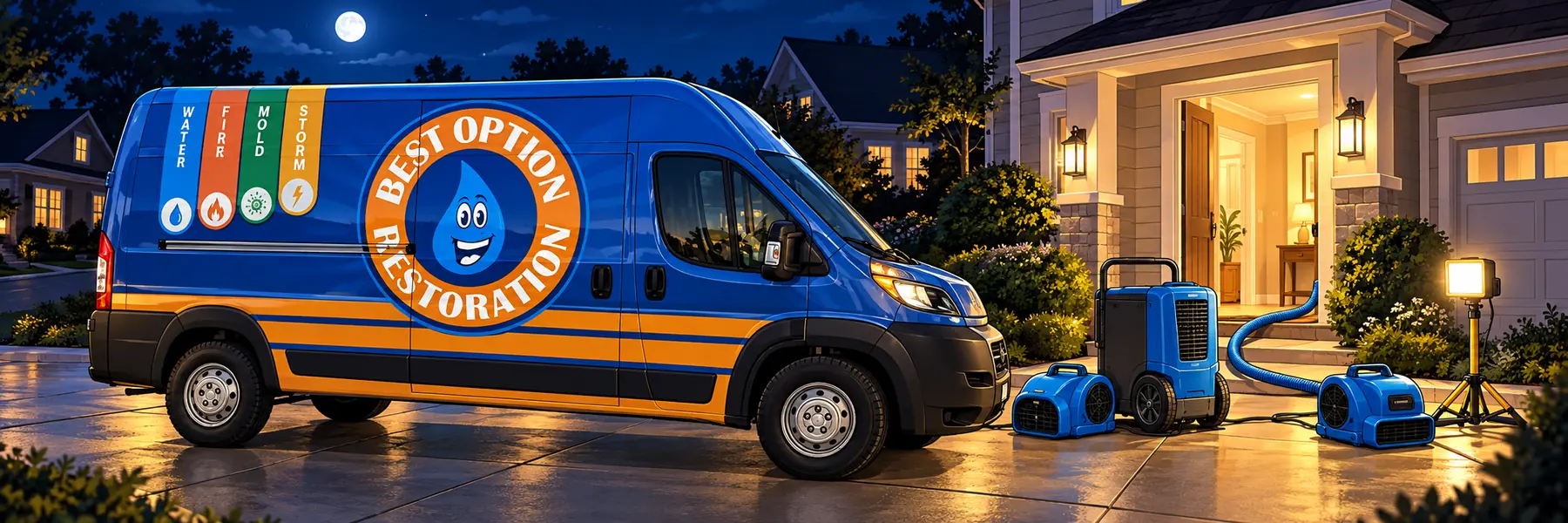
What happens from your call onward
Six phases in the first day. You'll have a written scope before we leave.
Live answer & triage
A person, not a queue. We ask what happened, where the water's coming from and how long it's been running. That sets the crew and equipment.
Dispatch & arrival
Crew rolls with extraction, drying, tarping and board-up capability so nothing waits on a second trip.
Make safe & stop the source
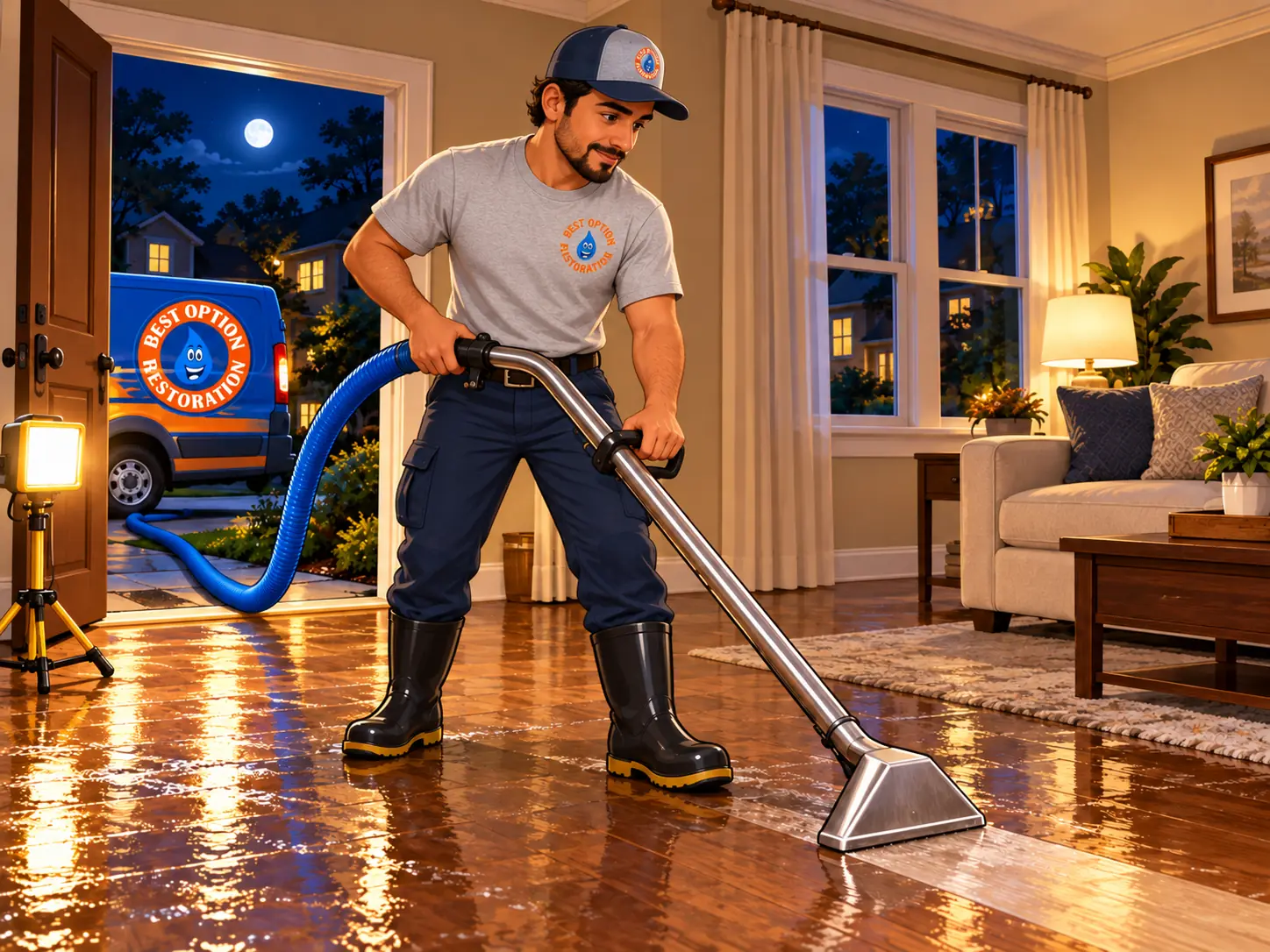
Electrical and structural hazards checked, source confirmed stopped, and extraction started immediately.
Moisture mapping
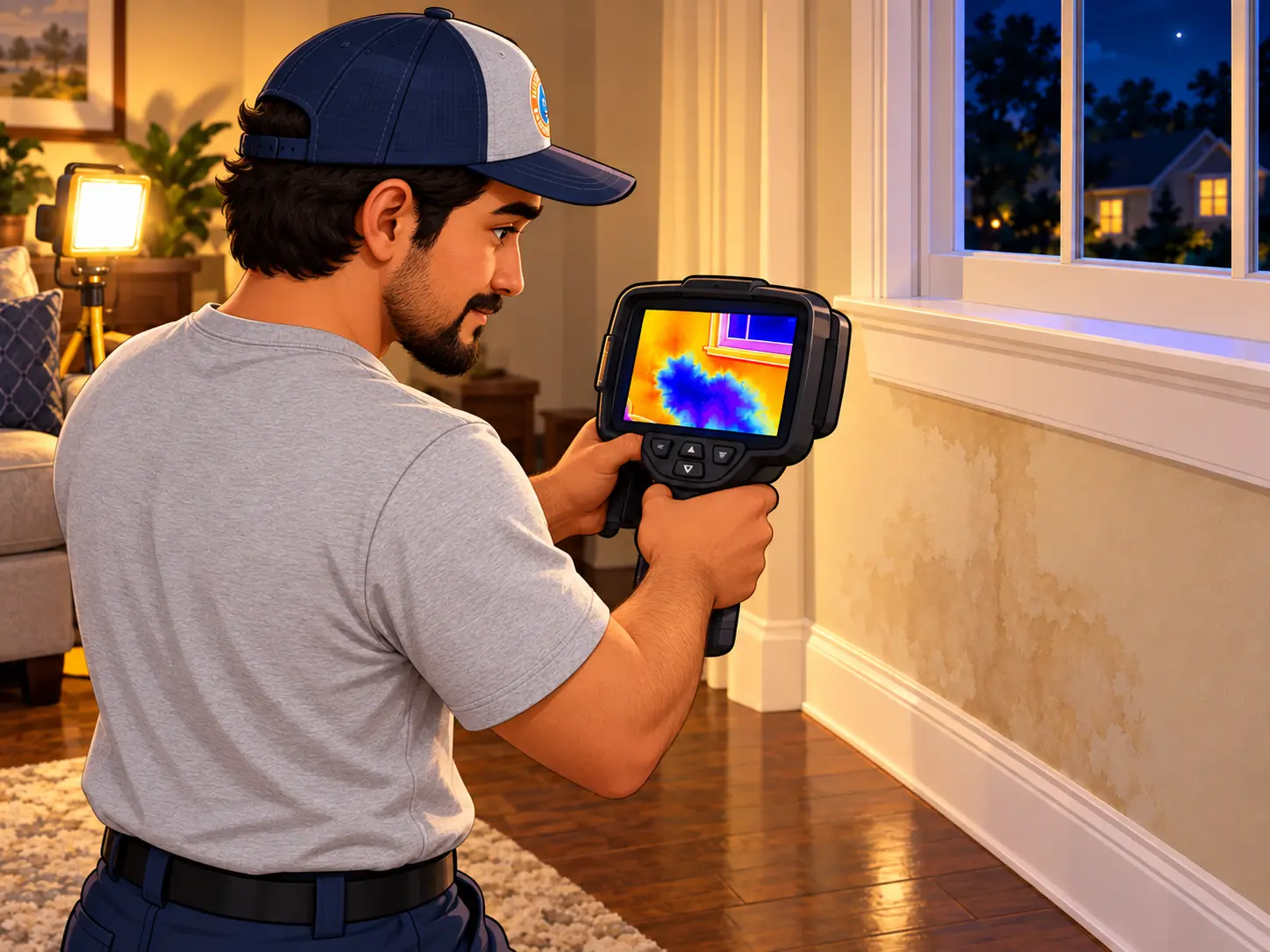
Meters and thermal imaging find water inside walls, under flooring and above ceilings. What you can see is rarely the full footprint.
Claim documentation
Photographs, readings and a room-by-room record built to carrier standards from the first hour, not reconstructed later.
Equipment set & written scope
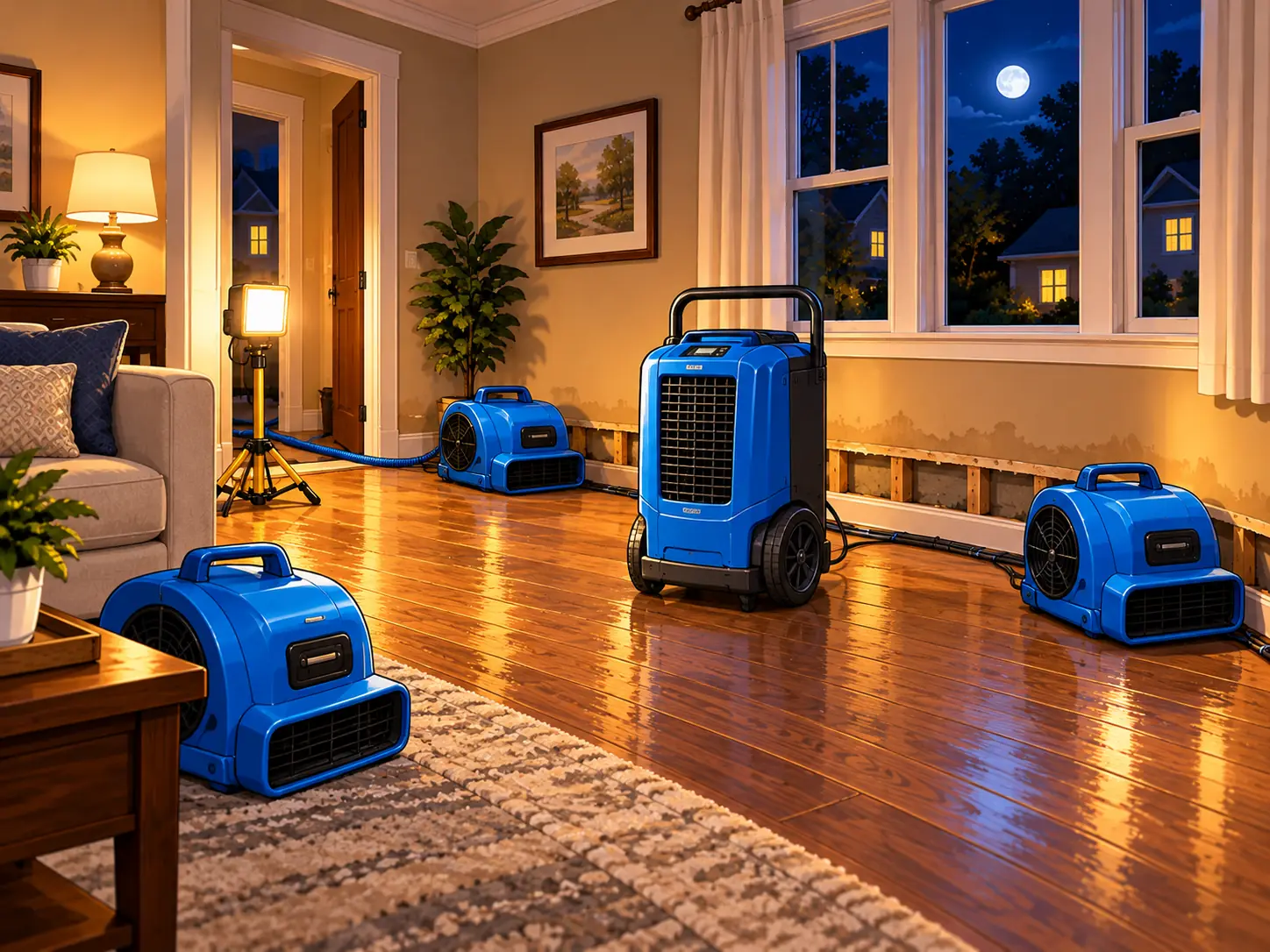
Air movers and dehumidifiers placed to a drying plan, then a written scope: what happens next, how long, and what it costs.
Calling us doesn't jeopardize your claim. Waiting might
The most common reason people hesitate at 2am is a worry that acting before the adjuster arrives will hurt the claim. It's the opposite. Texas homeowners policies contain a duty to mitigate: you're required to take reasonable steps to prevent further damage, and emergency mitigation is expected rather than something needing pre-approval.
You have a duty to mitigate
Stopping the water and starting extraction is compliance with your policy, not a risk to it. Documented delay is the thing that creates a coverage argument.
You choose the contractor
Your insurer might point you to a preferred vendor. In Texas you're never required to use one, and asking for an independent scope costs you nothing.
Document before you mitigate
Photograph first, then act. Timestamped photos taken before anything moves are the strongest evidence a claim can have, and the thing most people forget in the first ten minutes.
Ask about additional living expenses in the same call you open the claim. If the property is uninhabitable, most policies cover reasonable temporary housing while it's being repaired. Keep every receipt and confirm your ALE limit early.
Our licenses & response capability
Definitions, in one line each
Mitigation is the emergency work that stops damage from spreading: extraction, drying, tarping, board-up.
Duty to mitigate is your policy's requirement to take reasonable steps to limit further loss.
Moisture mapping is locating water inside assemblies with meters and thermal imaging rather than by sight.
Additional living expenses (ALE) is the coverage that pays to house you while the property is uninhabitable.
Board-up secures openings against weather and entry; tarping does the same for a roof.
What emergency response costs
The inspection is free. Emergency mitigation is a covered line item on a covered claim: these are the ranges carriers pay.
On a covered claim you generally pay only your deductible. After-hours emergency labor is billed at the standard rates carriers recognize, which is exactly why we put it into the claim rather than in front of you at 2am. Nobody should be weighing a callout charge against a spreading water loss.
We work with your insurance company
We bill your insurer directly and send your adjuster the emergency documentation. You pay your deductible. Hablamos español.
Don't see your insurer? We work with them too. Just ask.

Don't do these six things
Each one either makes the loss worse or makes it more dangerous.
Walk into standing water where power may still be on.
Use a household vacuum on water. It isn't built for liquid, it's a shock hazard, and it spreads contamination.
Run the HVAC in a sewage or smoke event. It distributes it through the house.
Stand under or poke a sagging, water-filled ceiling.
Throw anything away before it's photographed and documented.
Wait until morning because "it's only a little water". It never is.
Emergency response FAQs
Who do I call at 2am for a flooded house?+
Call a 24/7 restoration company for extraction and drying: (972) 357-1931 reaches Best Option Restoration of Keller with a live answer at any hour. Call the fire department first if there's any electrical hazard, gas smell or structural danger, and a plumber if the source is an active supply-line break you can't shut off. Waiting until morning is what turns a drying job into a demolition job.
Should I call my insurance company before calling you?+
No. Call us first so we can stop the damage, since every hour of waiting adds to it. We'll document what your adjuster needs and bill your insurer directly. Report the damage to your insurance company the same day.
How fast can you get here?+
Our target is arrival within 60 minutes of dispatch anywhere in our service area, 24 hours a day, 365 days a year. Watauga, Keller and North Richland Hills, closest to our Watauga base, are typically the quickest. During a widespread freeze or hail event demand spikes across the whole metro, so calling early rather than waiting to see how bad it gets matters.
Do you charge extra for after-hours or weekend calls?+
The on-site inspection is free at any hour. Emergency mitigation performed after hours carries the standard after-hours labor rates that carriers recognize and pay on a covered claim, which is why we bill it into the claim rather than to you. Nobody should be weighing a 2am callout charge against a spreading water loss.
Should I call you or my insurance company first?+
Call us first if water is actively spreading or the structure is open to the weather. Your policy requires you to mitigate promptly, and emergency mitigation is expected rather than something needing pre-approval. Call your carrier as soon as the immediate emergency is controlled, usually within the same few hours. Once you authorize it, we send your adjuster our scope, photos and moisture readings directly.
What happens in the first hour after you arrive?+
We make the area safe, stop or confirm the source is stopped, and begin extraction immediately. Then moisture mapping with meters and thermal imaging to find water inside walls and under flooring, photographs and readings for the claim, equipment set for drying, and a written scope with what happens next and how long it will take.
What should I do before you arrive?+
Get people out of the affected area, shut the water off if you safely can, kill power to wet areas at the breaker if the panel is dry, and photograph everything before anything moves. Lift furniture off wet carpet and move electronics and documents to a dry room. Don't use a household vacuum on standing water and don't enter a room with a sagging ceiling.
Is the emergency inspection really free?+
Yes, at any hour and with no obligation. A technician assesses the loss, takes moisture readings and tells you what the scope would be. If the honest answer is that you don't need professional mitigation, that's what we'll tell you. We'd rather be the company you call next time than the one that sold you equipment you didn't need.
What counts as a restoration emergency?+
Any active or recent water intrusion, a burst or frozen pipe, a sewage backup, a roof breach with rain forecast, fire or smoke damage, a structure open after a storm, or standing water of any depth. Water spreads through building materials by the hour, and mold can begin colonizing wet material within 24 to 48 hours, so nearly every water event is time-sensitive.
Do you work directly with my insurance company?+
Yes. We document the loss to carrier standards from the first hour, write the scope in Xactimate, speak to your adjuster directly once you authorize it, and bill the carrier. On a covered claim you generally pay only your deductible. You're never required to use a carrier's preferred vendor in Texas.
Emergency response near you
Dispatched 24/7 across every community we serve in northeast Tarrant and south Denton counties.
Safety guidance here is general; if there is any doubt about electrical, gas or structural hazard, call 911 and leave the property. Reviewed by Jonathan Dempsey, owner and lead project manager, IICRC WRT/ASD · Published September 7, 2026 · Last reviewed October 16, 2026 · Prices are estimates from past local jobs, not a quote.