
Storm & Hail Damage Repair in Keller, TX
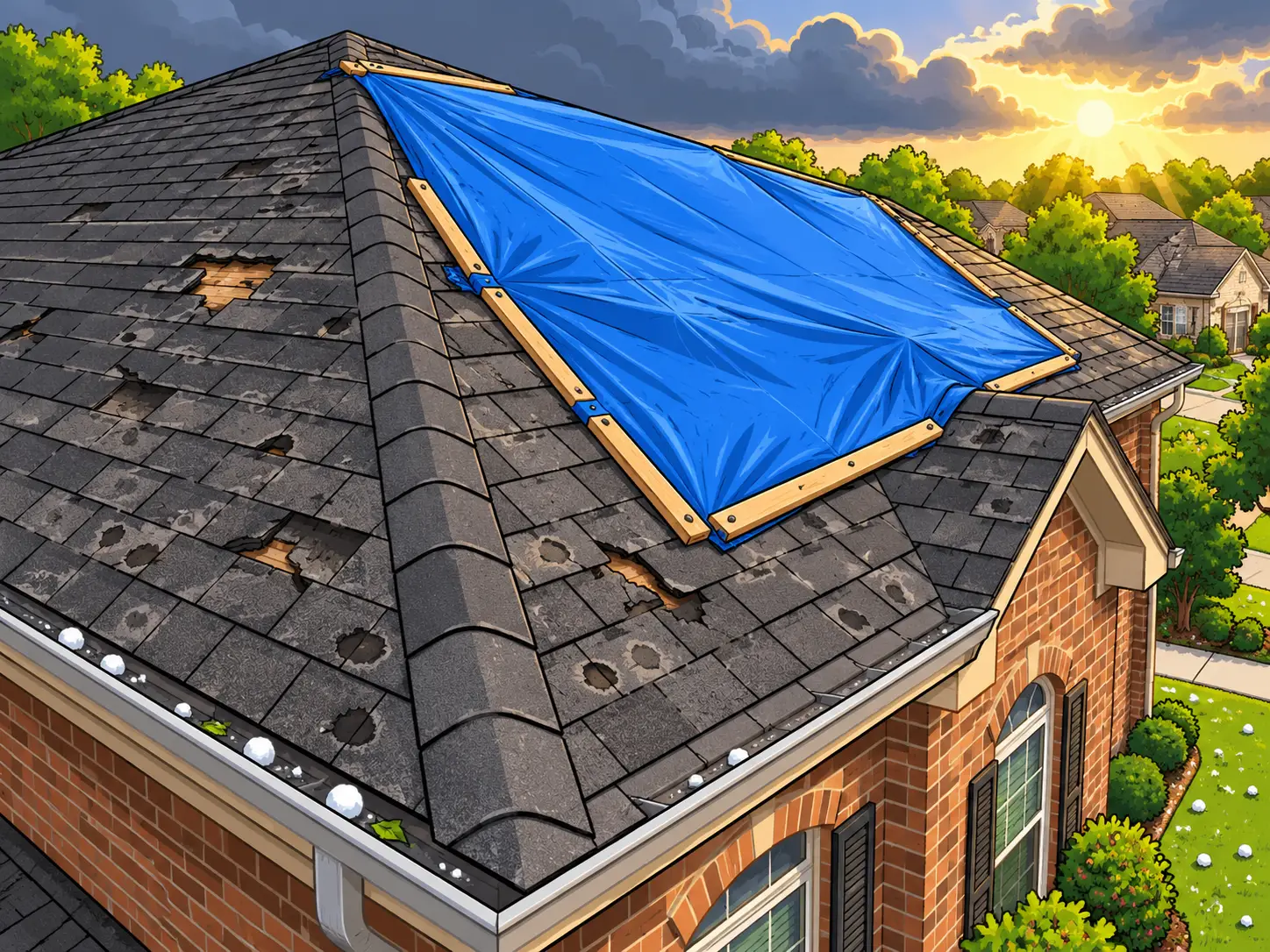
Storm and hail damage repair in Keller, TX starts with emergency roof tarping, then water extraction, drying and full reconstruction. Best Option Restoration of Keller documents hail size and storm date for your claim and bills your carrier directly. Tarping happens within hours; most repairs cost $800–$45,000 and take 1–6 weeks depending on roof and interior scope.
$800 tarping to $45,000 for roof plus interior rebuild.
Tarp in hours; repairs 1–6 weeks by scope.
Texas wind/hail deductibles are often 1–2% of dwelling value.
Often 1 year by policy. Check yours and file promptly.
You choose the contractor, not your carrier.
ANSI/IICRC S500 for the water intrusion side.
Signs of hail and wind damage
All of this is visible from the ground. None of it requires you on a ladder.
Granules in the gutters and at downspout outlets
Shingle granules are the roof's UV armor. Heavy loss after a storm means the mat underneath is now exposed.
Dents in soft metal: condenser fins, vents, gutters
The most reliable ground-level proof that the hail was big enough to bruise shingles.
Lifted, creased or missing shingles on the windward slope
Wind creasing breaks the seal even when the shingle stays in place. It leaks in the next storm, not this one.
Fresh ceiling stains, or a bulge in drywall
A bulging ceiling is holding water. Don't stand under it; call before it lets go.
Damaged window screens, splintered fence boards, torn siding
All claimable, and all commonly left off an initial adjuster scope.
Why North Texas is different
Keller sits inside one of the most hail-exposed corridors in the United States. Four things follow from that.
Peak season is March to June
Supercells track the I-35 corridor; a single April evening can hit thousands of roofs at once.
Separate wind-and-hail deductibles
Often 1–2% of dwelling value, so a $500,000 home can carry a $10,000 storm deductible.
Storm-chaser crews arrive in days
Out-of-state door-knockers, cash-for-deductible offers (illegal in Texas), and no warranty in three years.
Cosmetic exclusions are spreading
Read the endorsements: some Texas policies now pay ACV on older roofs or exclude cosmetic denting outright.

Our storm damage process, step by step
Six phases. Phase one is the one that keeps a roof claim from becoming a roof-and-interior claim.
Emergency tarping & board-up
Roof tarped, openings boarded, water diverted, before the next rain band arrives.
Extraction & structural drying
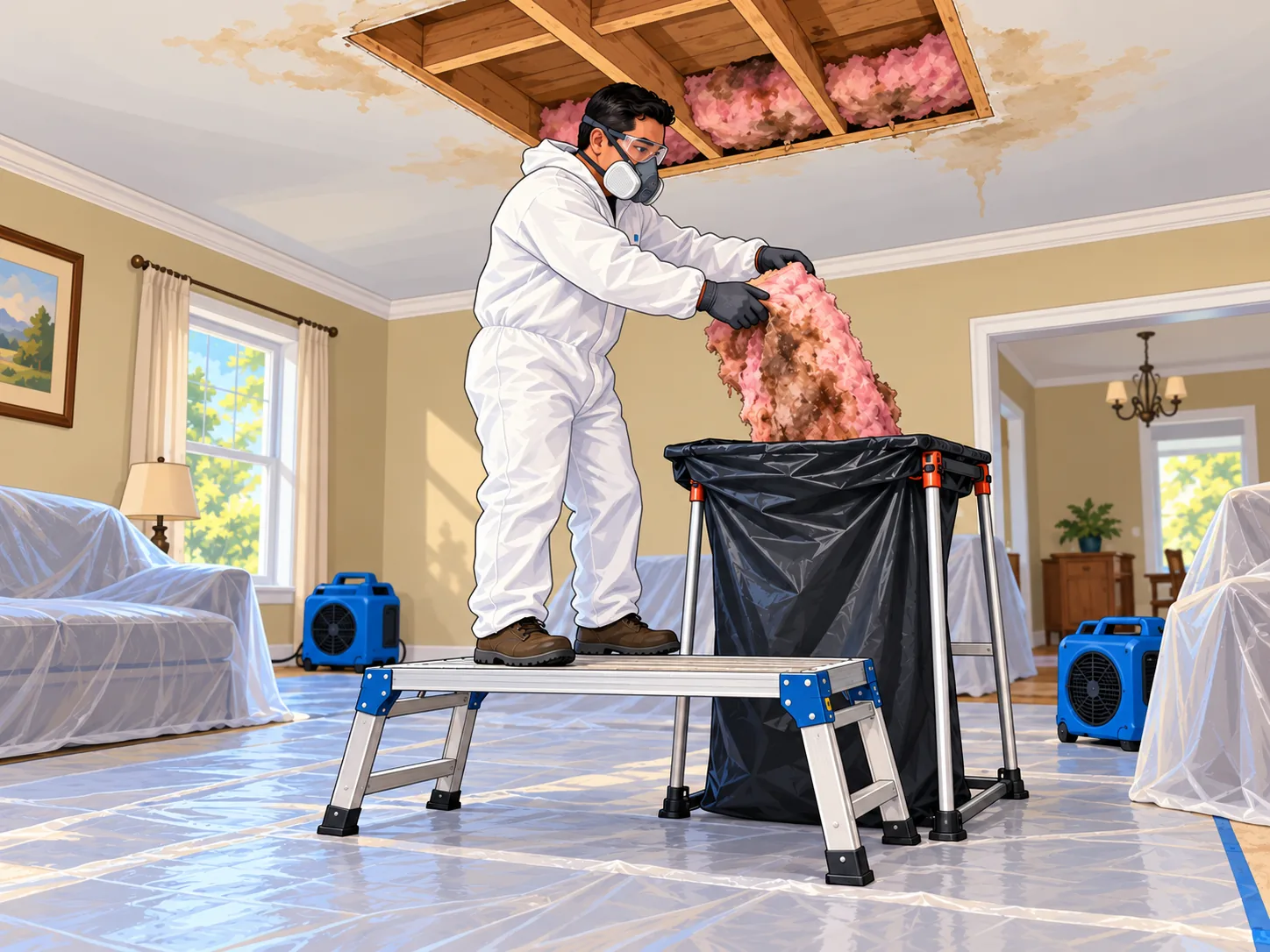
Water removed, wet insulation pulled, assemblies dried to a documented dry standard before mold starts.
Full damage documentation
Roof, siding, windows, gutters, condenser, fence and interior photographed and measured, with storm date and hail size from public weather data.
Claim scope & adjuster meeting
Scope written in Xactimate, presented to your adjuster, and supplemented with evidence where the first estimate misses damage.
Structural repair
Decking, framing, sheathing, siding and roof replacement with a licensed roofing partner, plus fallen-limb impact repair to current code.
Interior reconstruction
Ceilings, insulation, drywall, flooring, trim and paint back to pre-loss condition once the structure is dry and weather-tight.
Your rights on a Texas storm claim
Texas has specific consumer protections after severe weather, and knowing three of them changes how a claim goes.
You choose the contractor
Your carrier may recommend a preferred vendor. You are not required to use one, and asking for an independent scope costs you nothing.
Deductible rebates are illegal
Texas law prohibits a contractor from paying, waiving or rebating your insurance deductible. "We'll cover your deductible" is a red flag, not a discount.
Underpaid? Supplement, then escalate
Document what the scope missed and submit a supplement. If it stalls, your policy's appraisal clause and the Texas Department of Insurance complaint process are the next steps.
Roofing work in Keller, Southlake and Fort Worth requires municipal permits, and the currently adopted building code may require upgrades an older roof didn't have. Ordinance-or-law coverage is what pays for that, and it's worth asking your adjuster about explicitly.
Our licenses & certifications
Definitions, in one line each
Wind-and-hail deductible is a separate, usually percentage-based deductible that applies only to storm claims.
ACV vs RCV: actual cash value pays depreciated value; replacement cost value pays to replace, often in two payments.
Supplement is an additional claim submission for damage the original estimate missed.
Ordinance-or-law coverage pays for code-required upgrades triggered by the repair.
Appraisal clause is the policy provision for resolving a disputed loss amount without litigation.
What storm damage repair costs in DFW
Typical storm repair costs from local jobs. On a covered claim you generally pay only your wind-and-hail deductible.
Watch the endorsements rather than the headline. A Texas wind-and-hail deductible of 1–2% of dwelling value means a $500,000 home can carry a $5,000–$10,000 storm deductible, and roof-payment schedules that pay actual cash value on a roof over ten years old can leave a large gap. We tell you what the gap looks like before work starts, not after.
Get out and call 911 if you notice any of these
Once everyone is safe, call us. We'll take it from there.
- You smell gasLeave now. Don't flip switches.
- Sparks or a wet breaker panelStay out of the water.
- A sagging or bulging ceilingIt can come down without warning.
- Smoke, fire or structural crackingGet everyone outside first.
We work with your insurance company
We bill your insurer directly and send your adjuster storm-date and damage photos. You pay your deductible. Hablamos español.
Don't see your insurer? We work with them too. Just ask.

The first hour after a storm
Six steps, in order. Note that none of them involve climbing anything.
Stay inside until the storm has fully passed; watch for downed lines.
Photograph hail on the ground next to a coin, and note the date and time.
Photograph from the ground: roof slopes, gutters, condenser, screens, siding, fence, vehicles.
Bucket active leaks, move furniture off wet carpet, don't stand under a bulging ceiling.
Call us for tarping before the next band. Then open the claim.
Don't sign anything a door-knocker hands you that evening.


Storm & hail damage FAQs
What should I do in the first hour after hail damage?+
Photograph everything from the ground (roof, siding, windows, gutters, HVAC condenser, fencing and vehicles) and note the date and time of the storm. Place buckets under active leaks and move furniture off wet carpet. Call for emergency tarping before the next rain band. Don't climb on a hail-struck roof; the granule loss makes it slippery and you can worsen the damage.
How do I know if my roof has hail damage?+
From the ground, look for granule accumulation in gutters and downspouts, dented gutters, dinged metal vents and flashing, and split or bruised shingles. Damaged soft metals such as HVAC condenser fins and window screens are the most reliable ground-level indicator that hail was large enough to damage shingles. A professional inspection confirms it; walking the roof yourself doesn't.
Does homeowners insurance cover hail damage in Texas?+
Hail and windstorm are covered perils on most Texas homeowners policies, though many carry a separate wind-and-hail deductible of one to two percent of the dwelling value rather than a flat amount. Cosmetic-damage exclusions and roof-payment schedules that pay actual cash value on older roofs are increasingly common in Texas, so the endorsement page matters as much as the declarations page.
How long do I have to file a hail claim in Texas?+
Most Texas policies require prompt notice, and many now require the claim within one year of the storm. The two-year figure often quoted is the deadline to sue an insurer, not to report the claim. Waiting is still the wrong strategy: the longer you wait, the harder it becomes to separate storm damage from ordinary wear. The most common reason a hail claim is denied.
How much does storm damage repair cost?+
Emergency tarping runs $800 to $2,500. Interior water damage from a roof breach is typically $2,500 to $12,000. A full roof replacement in DFW runs $12,000 to $30,000, and a fallen-tree impact with structural framing repair commonly exceeds $25,000. On a covered claim you generally pay only your wind-and-hail deductible.
Do you replace roofs, or just tarp them?+
We tarp immediately, then handle the interior water damage, drying and reconstruction, and coordinate roof replacement as part of the same claim scope with a licensed roofing partner. Keeping it in one scope avoids the common situation where the roof gets replaced and the wet insulation and ceiling above the bedroom never do.
Should I use the contractor my insurance company recommends?+
In Texas you have the right to choose your own contractor. A carrier's preferred vendor works within program pricing and volume agreements with the carrier; an independent contractor's obligation is to your scope. Either can do good work, but you're never required to accept the recommendation, and asking for a second scope costs nothing.
Should I sign with a storm-chaser contractor going door to door?+
Be careful. After a major North Texas hail event, out-of-state crews arrive within days, and Texas law prohibits a contractor from waiving or rebating your insurance deductible. Ask for a local address, license and insurance certificate, consider whether they'll exist for a warranty claim in three years, and never sign a contingency contract you haven't read.
What if my adjuster's estimate doesn't cover the full damage?+
That's what a supplement is for. We document what the initial scope missed with photographs, moisture readings and measurements, and submit it to the carrier as a supplemental claim. Most disputes are resolved on documentation rather than argument. If it stalls, your policy's appraisal clause and the Texas Department of Insurance complaint process are the next steps.
Roof open and rain forecast?
Tarping tonight is cheaper than a ceiling next week. We run it 24/7 through storm season.
Storm damage repair near you
When a hail core tracks across northeast Tarrant County we're already local, no waiting for out-of-state crews.
Reviewed by Jonathan Dempsey, owner and lead project manager, IICRC WRT/ASD · Published September 7, 2026 · Last reviewed October 16, 2026 · Coverage descriptions are general; your policy language controls. Costs are typical figures from past jobs, not a quote.