
Water Damage Removal & Cleanup in Keller, TX
Standing water gets pumped, hidden moisture gets found, and every reading gets logged for your carrier. Best Option Restoration of Keller extracts, dries to IICRC S500 dry standard, and rebuilds what came out, with the same crew from the first hour to the final coat of paint.
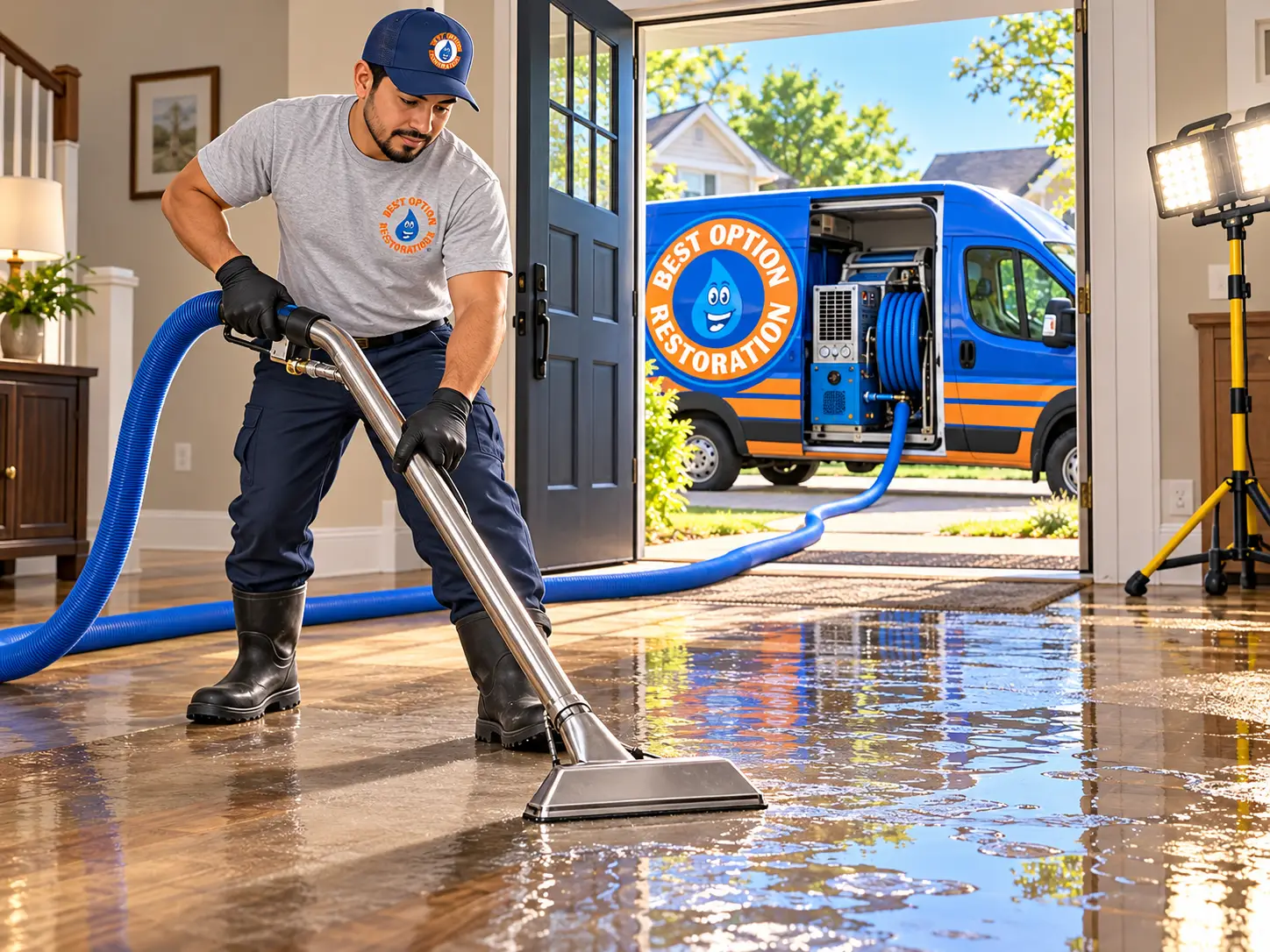
Extraction within the hour, drying in 3–5 days, rebuild scoped and billed to your carrier.
$1,500–$8,000 for mitigation in DFW; usually only your deductible on a covered claim.
Growth can begin on wet material within 24–48 hours (EPA guidance).
ANSI/IICRC S500, with daily psychrometric documentation.
What we handle
Most calls we take in Keller come from one of these six situations. All of them are covered by the same 24/7 crew.
Burst & frozen pipes
North Texas freeze events split supply lines in attics and exterior walls. We extract, open only what must be opened, and dry the cavity.
Water heater & appliance failures
Tank ruptures, supply-hose blowouts, dishwasher and fridge-line leaks, often discovered hours after they start.
Slab & under-floor leaks
Thermal imaging and moisture mapping locate the wet footprint before anyone breaks concrete.
Sewage backups (Category 3)
Containment, PPE, removal of porous materials and full antimicrobial treatment: health hazard, not a mop job.
Roof & storm intrusion
Emergency tarping plus interior drying, so the ceiling doesn't come down two weeks later.
Commercial & multifamily losses
Multi-unit extraction phased around residents and tenants, with one point of contact for the property.
Our water damage process, step by step
Six phases. You get a written scope after phase two and daily readings from phase four on.

Emergency call & dispatch
Live dispatcher, nearest crew sent immediately, safety instructions over the phone while we drive.
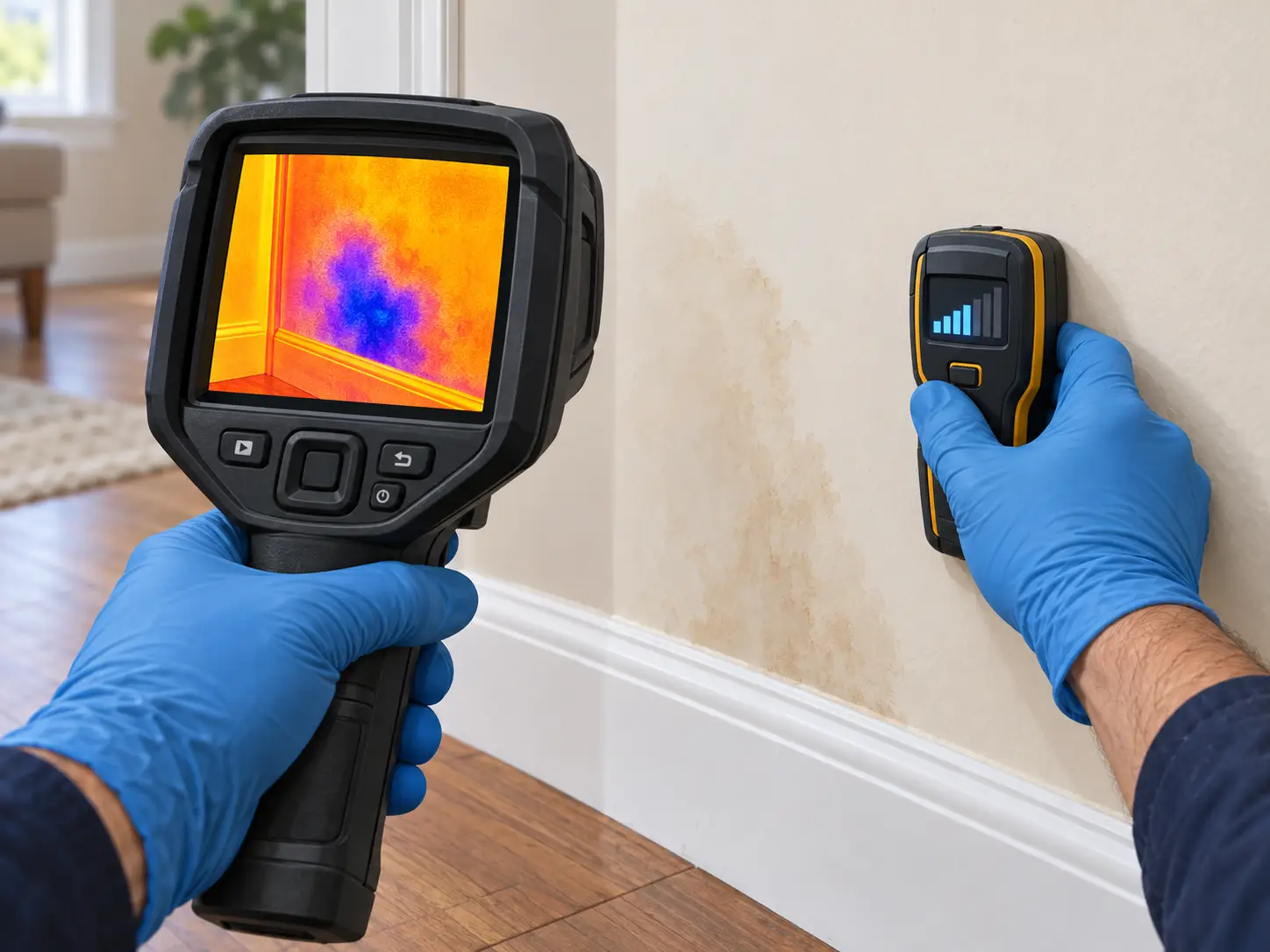
Inspection & moisture mapping
Thermal imaging, penetrating and non-penetrating meters, water category and class determined, scope written.
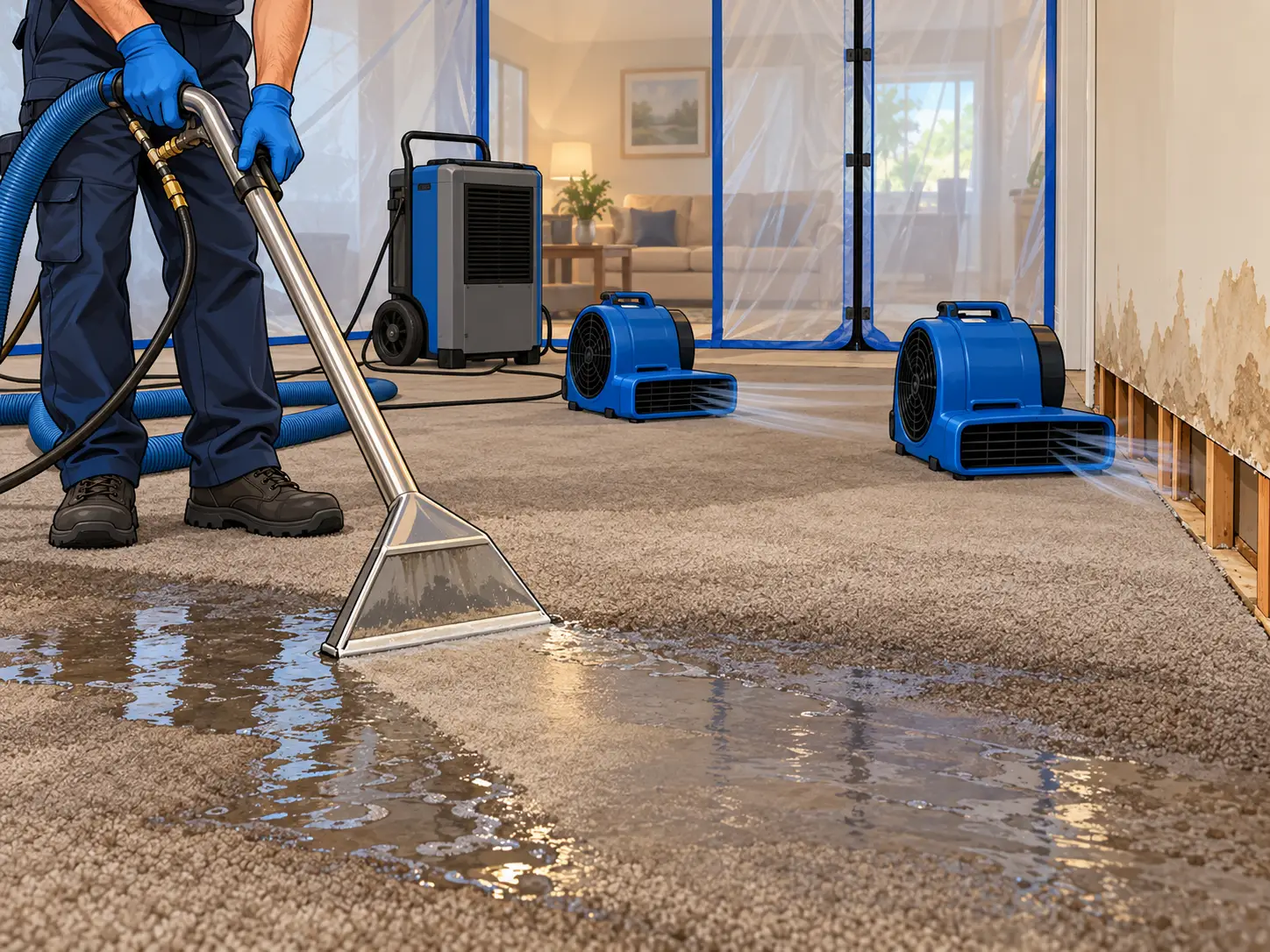
Extraction & controlled removal
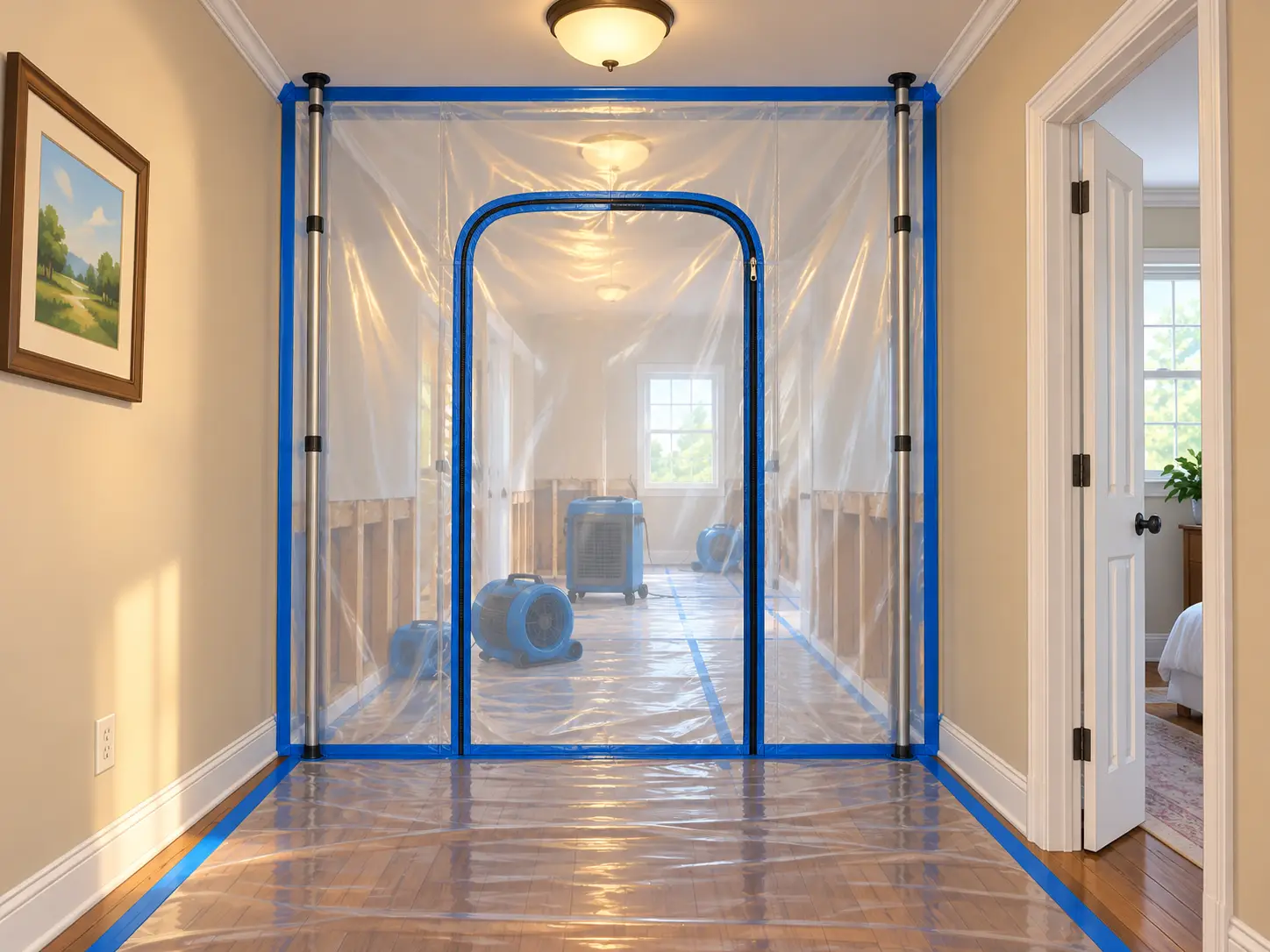
Truck-mounted and portable extraction, carpet pad and unsalvageable material out, containment where needed.
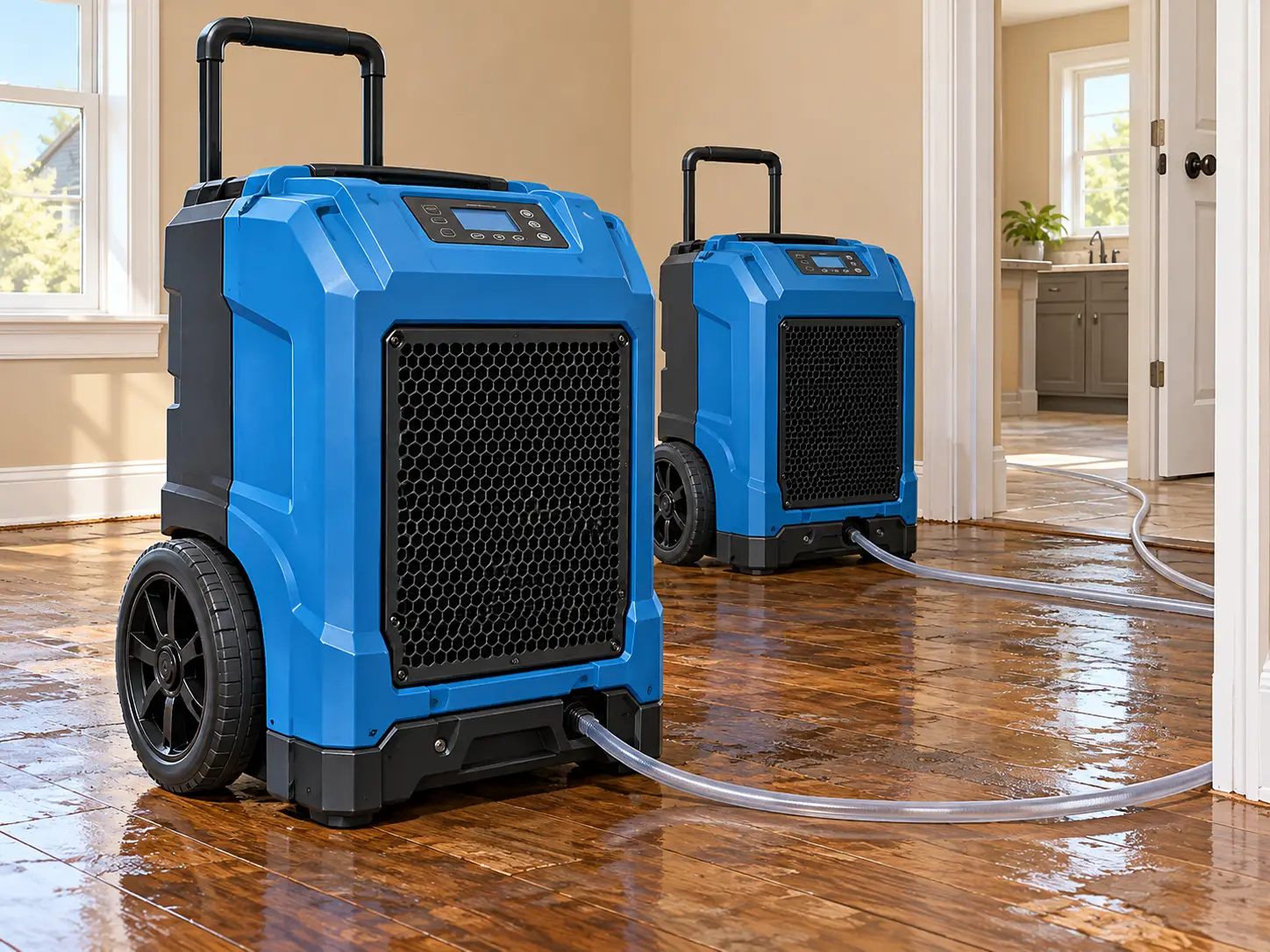
Structural drying
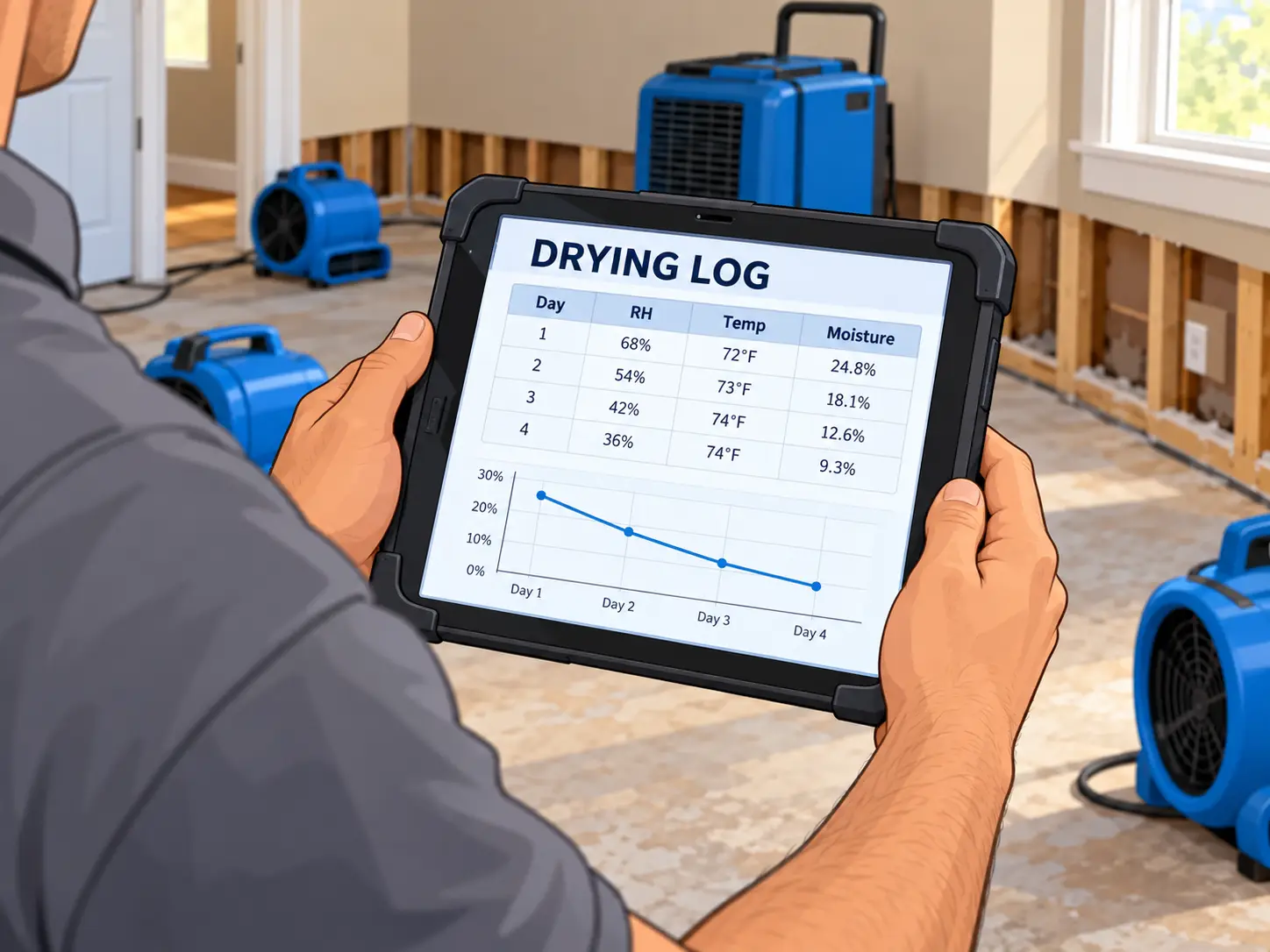
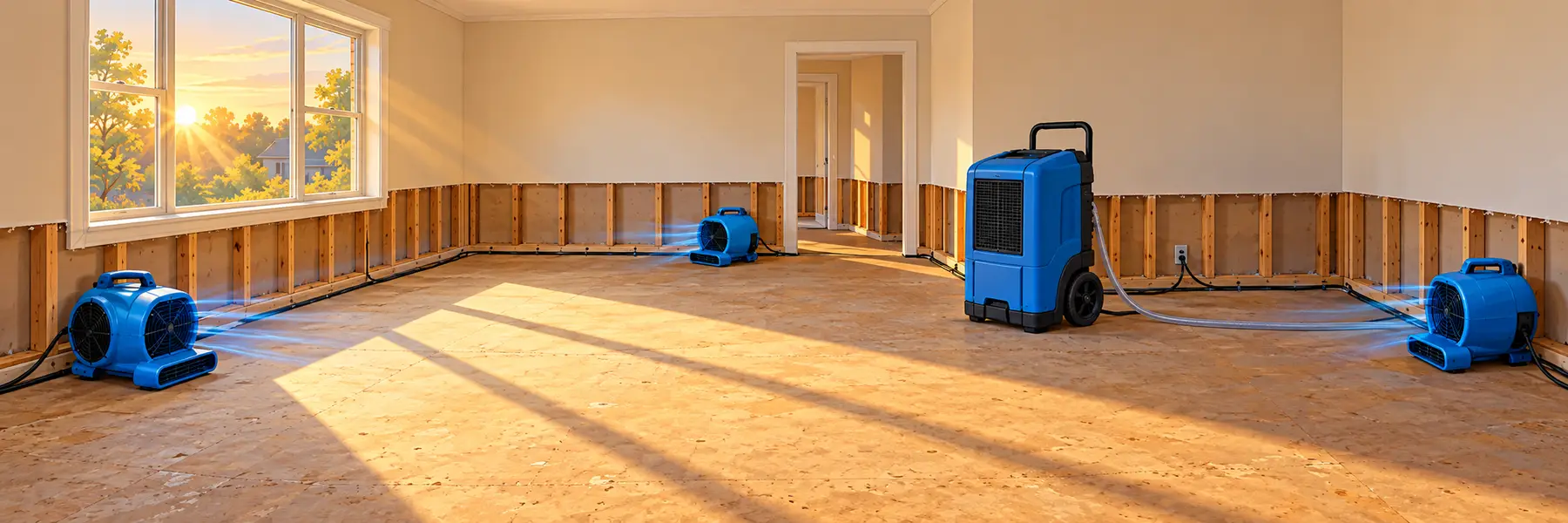
Air movers plus LGR dehumidification, cavity drying where walls stay intact, daily readings logged and shared.

Antimicrobial & clearance
Treatment of affected assemblies, verification that every material hit dry standard, sign-off before rebuild.
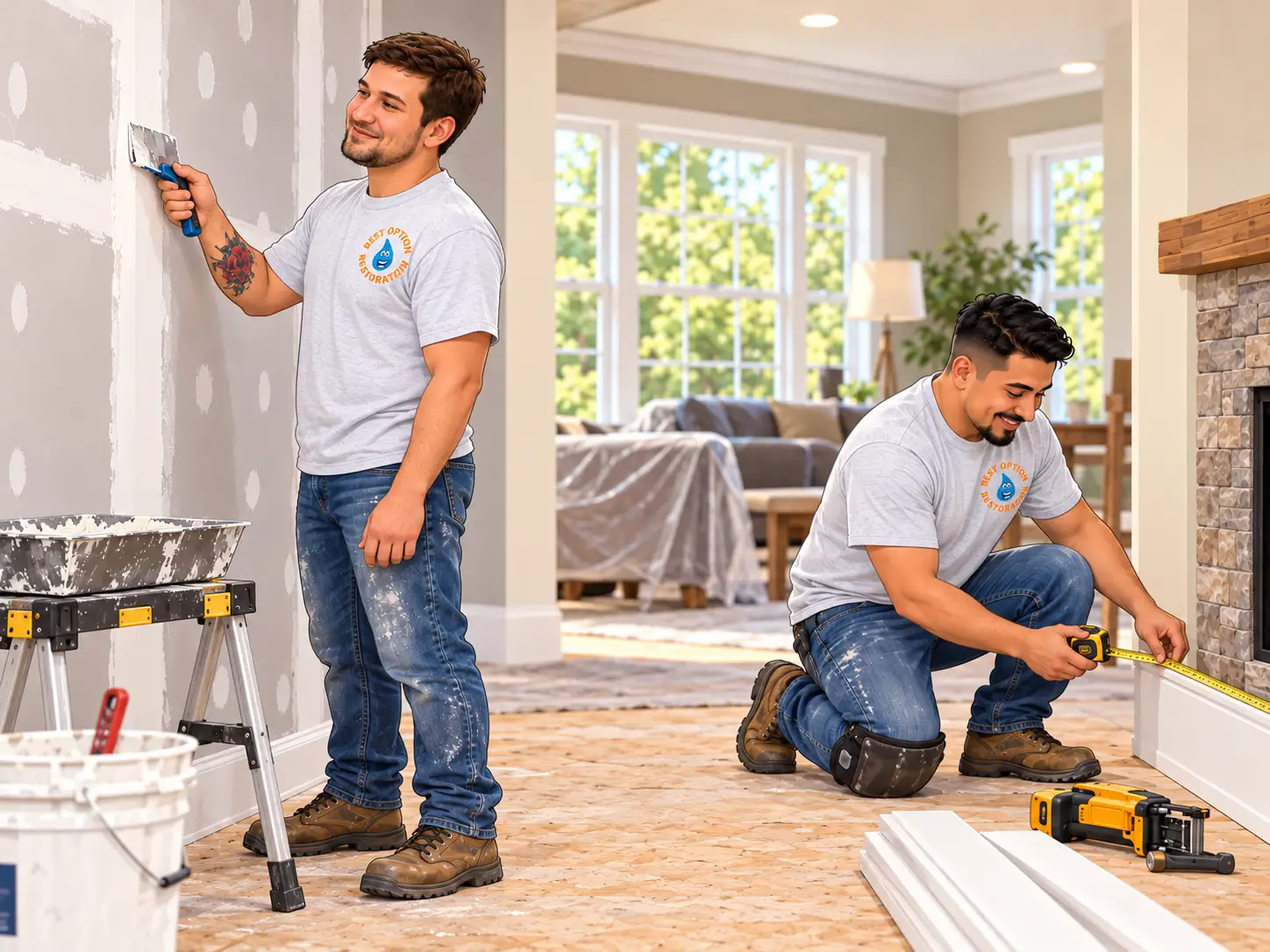
Repairs & reconstruction
Drywall, texture, paint, flooring, trim and cabinetry matched to pre-loss condition, then final walkthrough.
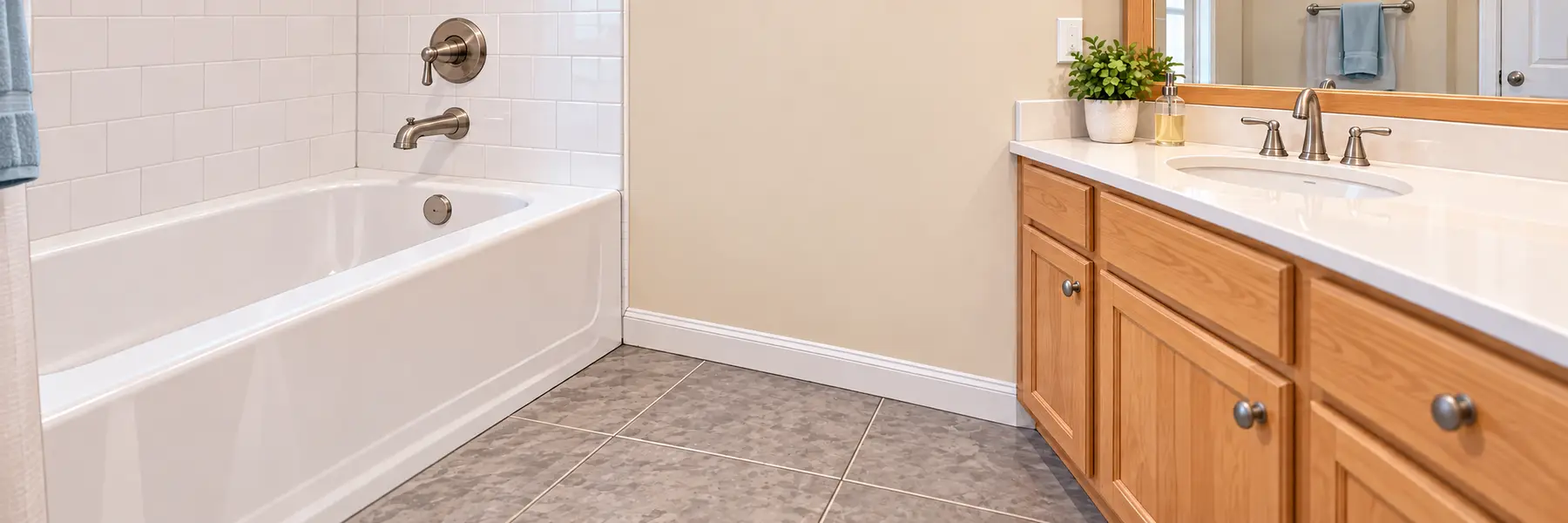
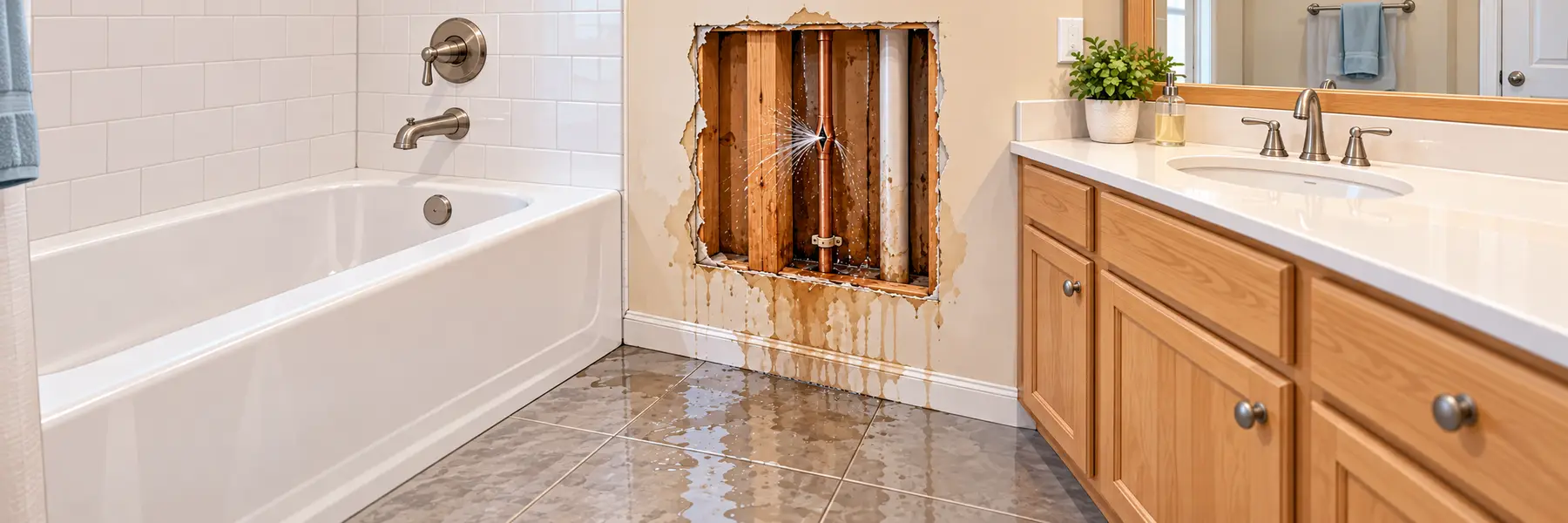
Same house, four weeks apart
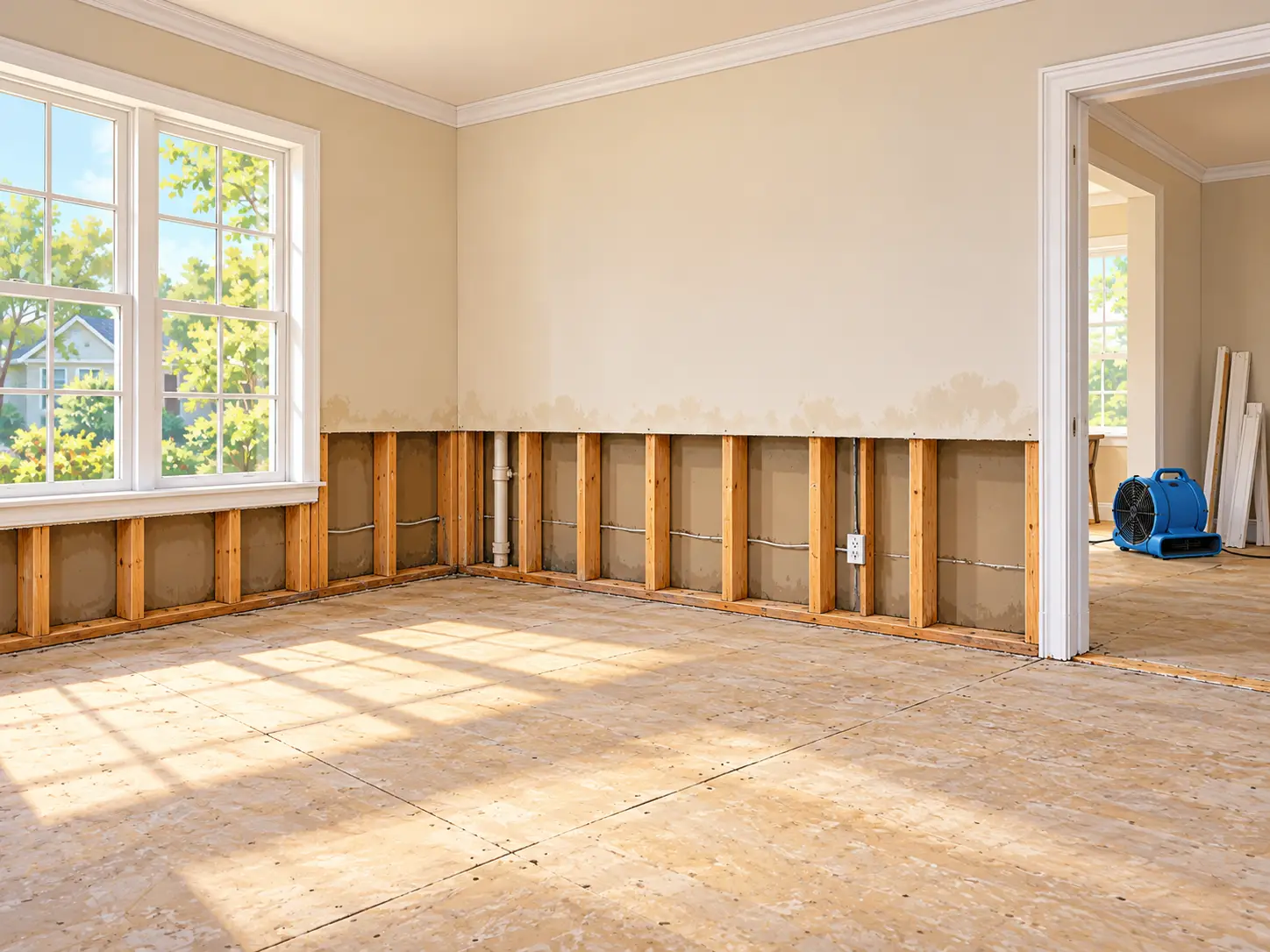
Keller, burst supply line behind a second-floor bathroom. Drag the handle to see what the rebuild put back.
 EXPLAINER · 2:05
How we dry a house without gutting it
Cavity drying, air-mover placement and why the dehumidifier, not the fan, does the work.
 TIME-LAPSE · 0:45
Five days of drying in 45 seconds
Equipment in, readings falling, equipment out: an entire mitigation cycle compressed.
Get out and call 911 if you notice any of these
Once everyone is safe, call us. We'll take it from there.
- You smell gasLeave now. Don't flip switches.
- Sparks or a wet breaker panelStay out of the water.
- A sagging or bulging ceilingIt can come down without warning.
- Smoke, fire or structural crackingGet everyone outside first.
Heat-assisted drying
A fan moves air, but it doesn't pull water out. We add controlled heat with dehumidifiers so water moves out of drywall, wood and subfloor faster. Your home dries sooner, and more of it can be dried in place instead of torn out.
- ✓Less demolition and a shorter rebuild
- ✓Daily moisture readings until everything is dry
- ✓Done by IICRC-certified drying technicians
We work with your insurance company
We bill your insurer directly and send your adjuster the photos and moisture readings they need. You pay your deductible. Hablamos español.

Don't see your insurer? We work with them too. Just ask.
DIY drying vs. professional restoration
Fans move air; they don't remove water vapor. Here's the practical difference on a typical Category 1 kitchen loss.
Water damage FAQs
How much does water damage restoration cost?+
Most residential losses in DFW run roughly $1,500–$8,000 for mitigation and drying, driven by affected square footage, water category, and how much material has to come out. Reconstruction is scoped separately. On a covered claim you typically pay only your deductible, and the assessment is always free.
Do I need to call my insurance company first?+
No. Call us first so we can stop the damage right away, because waiting can make it worse. We can help with your claim: we document everything your adjuster needs and bill your insurance company directly. Let your insurer know about the damage the same day.
How long does it take to dry a house?+
Typically 3–5 days of continuous drying with daily meter readings. Dense materials (hardwood, plaster, concrete) take longer. Drying is finished when materials reach the documented dry standard, not when the surface feels dry.
Can you dry it without cutting out my drywall?+
Often, yes: for clean-water losses caught early we use cavity drying systems to dry wall assemblies in place. Category 2 and 3 water, or drywall wet longer than about 48 hours, usually requires controlled removal. We tell you which before we cut anything.
Will my rates go up if I file a claim?+
That's between you and your carrier, and it depends on your claim history. What we can tell you is the cost of the loss if it isn't mitigated: unaddressed water becomes a mold claim, and mold claims are far more likely to be limited or excluded. We'll document the loss either way, and you decide whether to file.
Water still running?
Don't wait for a form. A dispatcher answers 24/7 and a crew is on the way while we're still on the call.
Call (972) 357-1931Water damage restoration near you
Same crew, same 60-minute target, across every community we serve.
Written and reviewed by Best Option Restoration of Keller ownership (IICRC WRT/ASD) · Last updated October 2026 · Guidance follows ANSI/IICRC S500 and EPA mold guidance and is not a substitute for an on-site assessment.
Video slot: drop in the MP4 or paste the YouTube / Vimeo embed for this clip.