
Mold Remediation & Removal in Keller, TX
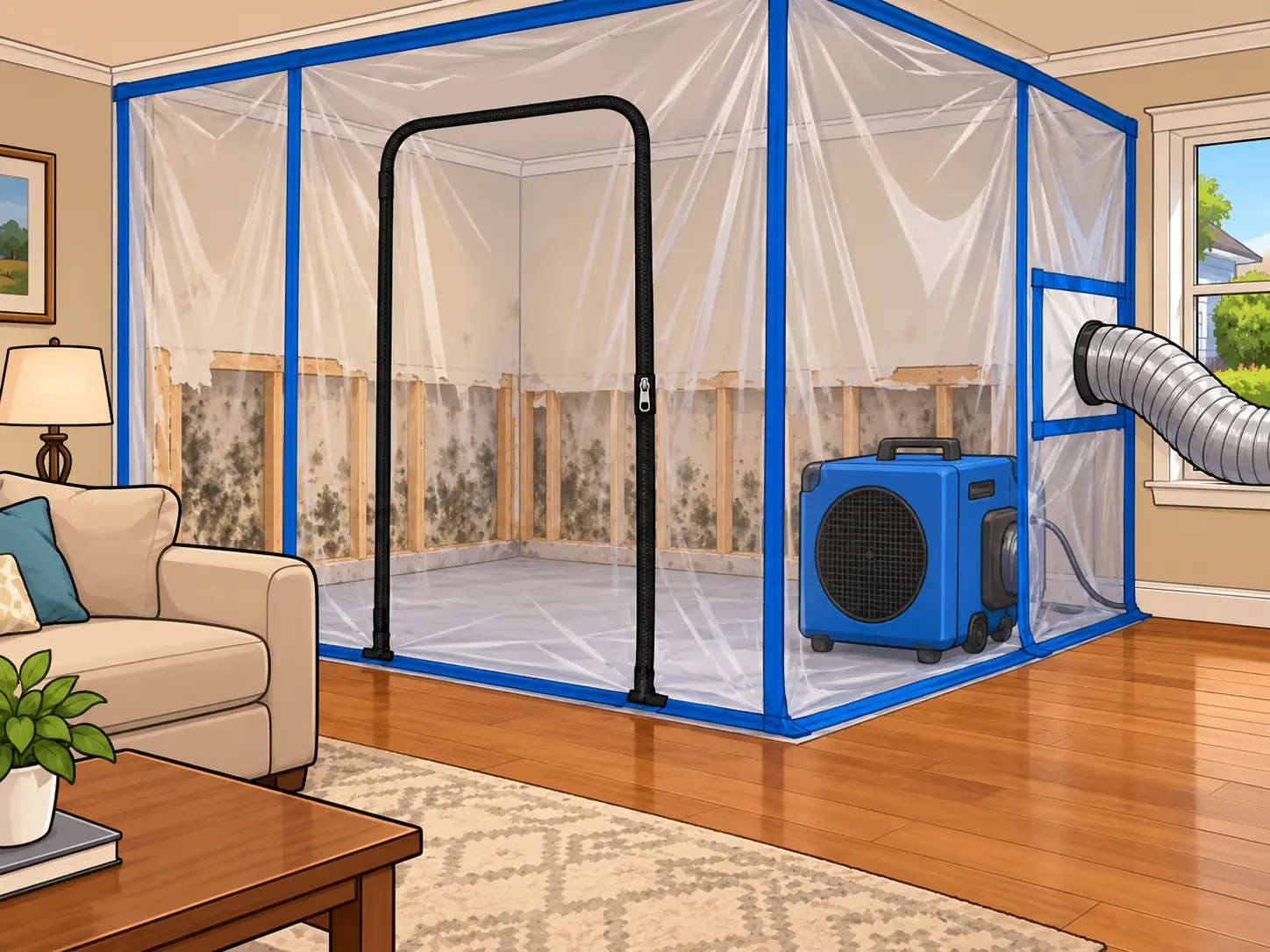
Mold remediation in Keller, TX is the licensed removal of mold growth under containment, followed by correction of the water source and third-party clearance testing. Best Option Restoration of Keller is an IICRC Certified Firm. We clean up smaller areas ourselves; projects of 25 contiguous sq ft or more are performed by an independent TDLR-licensed Mold Remediation Contractor, and we handle the water source, drying and rebuild. Most projects take 2–5 days and cost $1,200–$9,000, with free inspection and direct insurance billing.
$1,200–$9,000 in DFW, by affected square footage.
2–5 days of remediation, plus 1–3 days for clearance results.
25+ contiguous sq ft requires a licensed assessor's protocol.
ANSI/IICRC S520 and EPA mold remediation guidance.
Often covered after a sudden water loss; sublimits usually apply.
Free inspection, typically same or next day; 24/7 line.
Signs you have a mold problem
Most of the mold we find in Keller homes was never visible. These are the tells that bring us out.
A musty smell that returns when the AC runs
Usually growth on wet insulation or ductwork, pushed through the house by the air handler.
Staining, bubbling paint or soft drywall at floor level
Water wicks upward. A stain 8 inches up a wall means the bottom plate has been wet for a while.
Allergy symptoms that improve when you leave the house
Congestion, cough or eye irritation that clears at work or on holiday and returns at home.
A past water loss that was never professionally dried
Mold can begin colonizing wet material within 24–48 hours. Fans dry surfaces, not wall cavities.
Growth on the cold side of an exterior wall or window frame
Condensation-driven, common in North Texas summers where humid air meets an over-cooled surface.
Where it starts in North Texas homes
Four sources account for most of the mold calls we take between May and September.
Failed shower pans & supply lines
Slow, hidden, and often running for months behind tile.
Attic duct condensation
Cold ducts in a 130°F attic sweat onto insulation and ceiling drywall.
Undried freeze breaks
February's pipe break becomes July's mold call when only the carpet got dried.
Slab-edge & clay-soil moisture
Expansive clay moves the slab; moisture finds the plate and the flooring adhesive.
Our mold remediation process, step by step
Six phases. Steps two and six are performed by an independent licensed assessor, not by us. That separation is Texas law, and it's also your protection.
Free inspection & moisture mapping
Thermal imaging and meters find the wet footprint, we photograph growth and measure affected square footage, which decides whether an assessor is legally required.
Assessment & written protocol
At 25 contiguous sq ft or more, a licensed Mold Assessment Consultant writes the protocol and a TDLR-licensed Mold Remediation Contractor performs it. We coordinate both and handle the drying and rebuild.
Containment & negative air
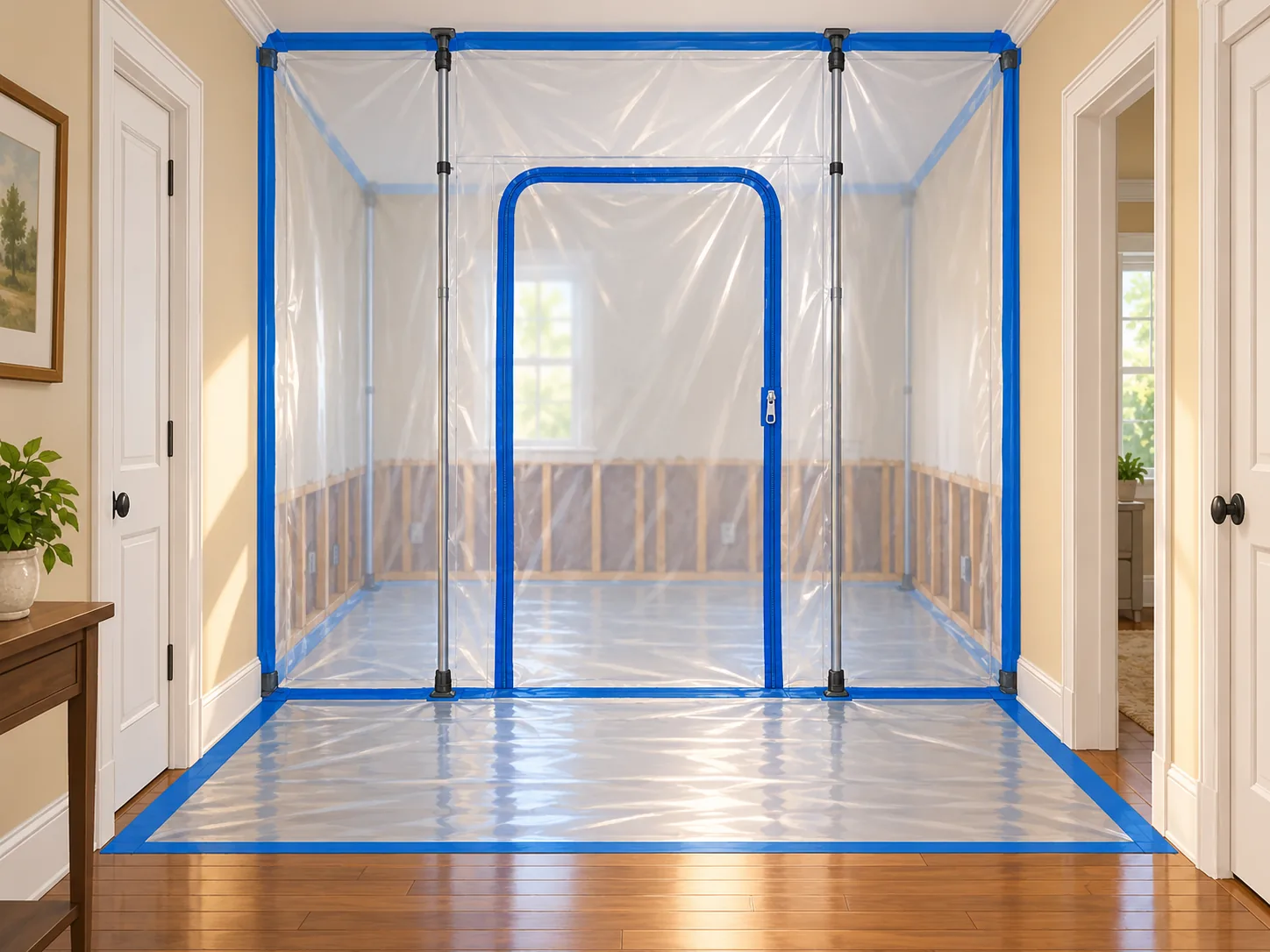
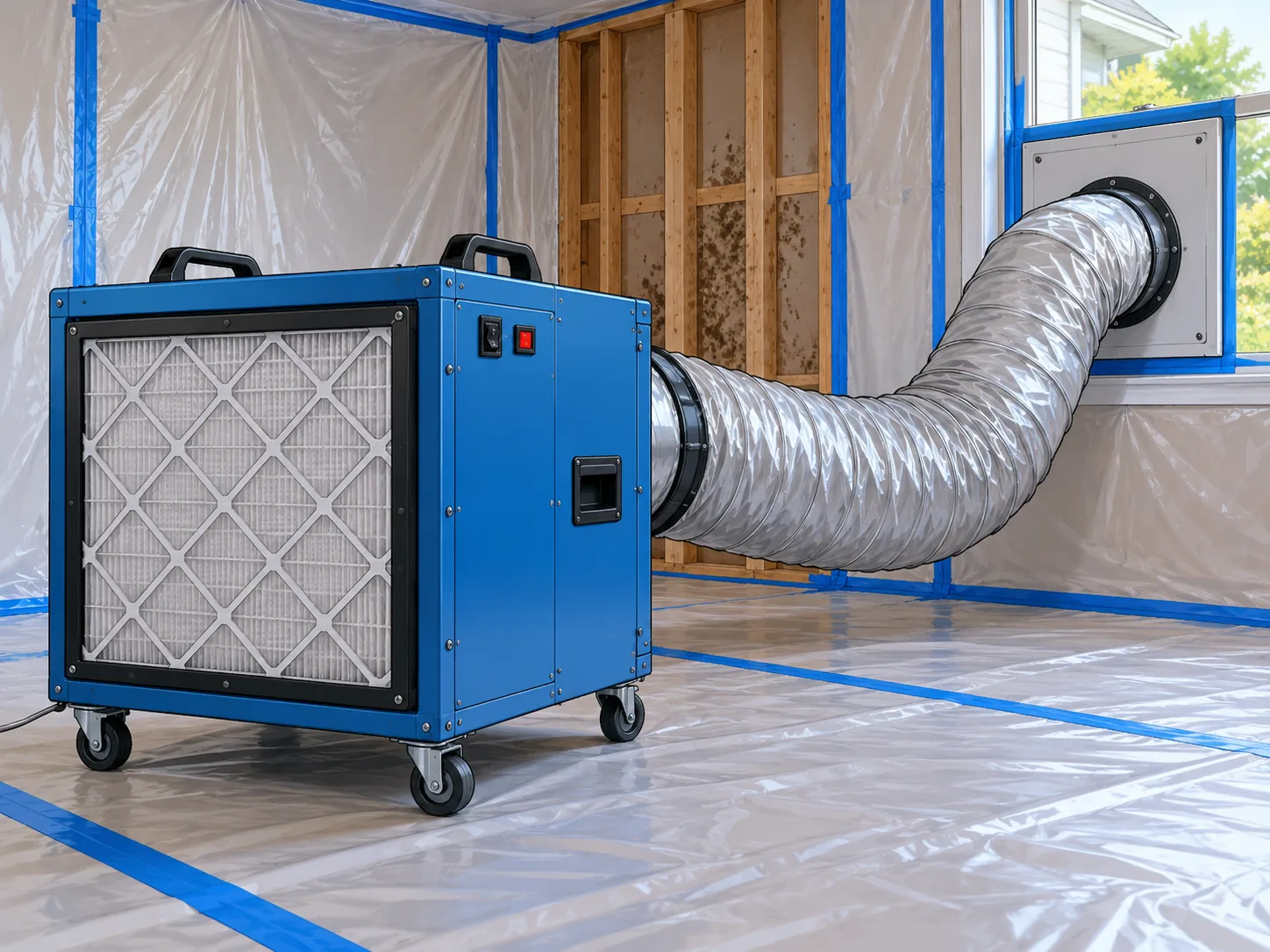
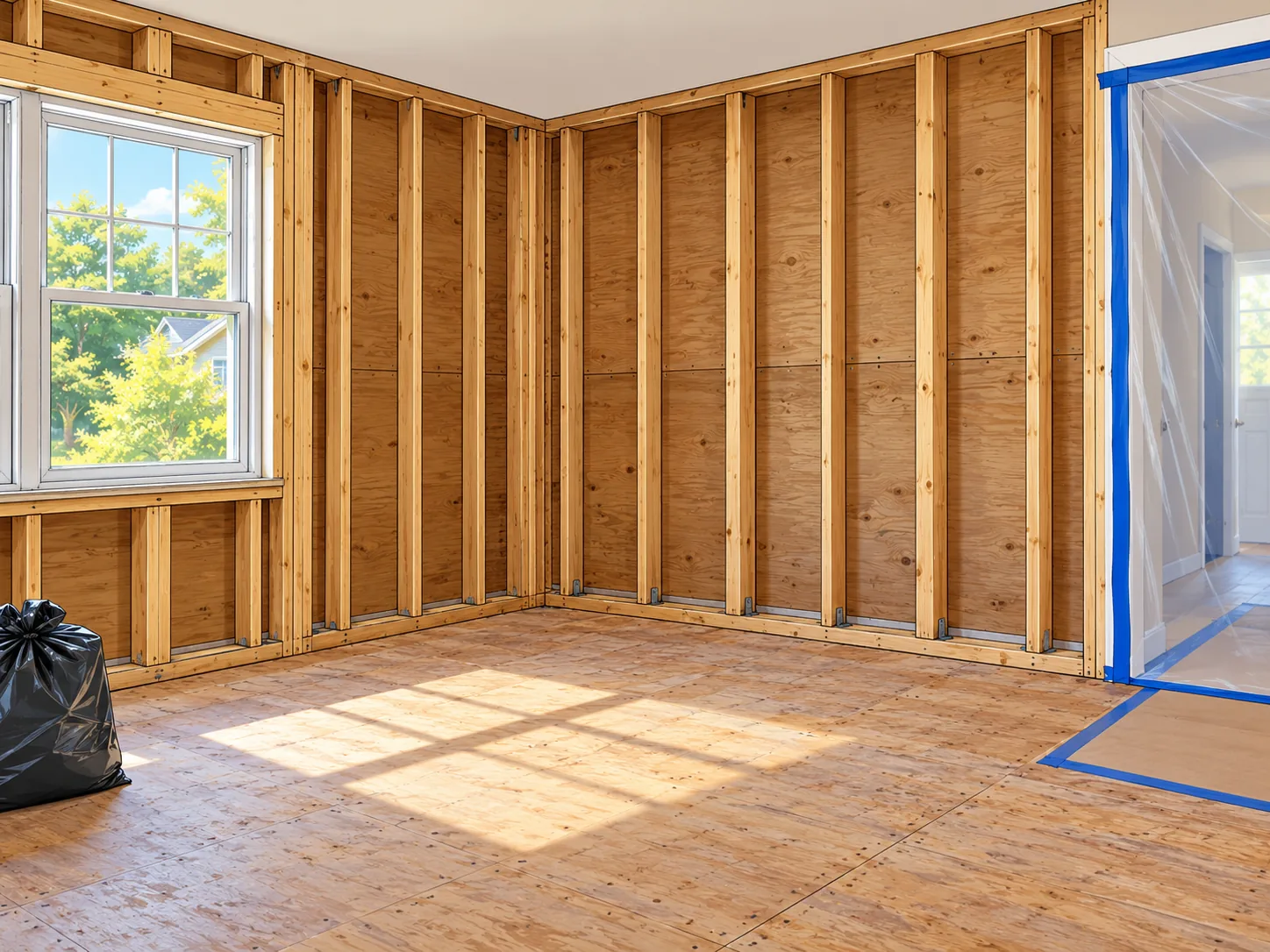
6-mil sheeting, sealed HVAC, HEPA-filtered negative air machines and a decontamination entry, so nothing migrates into clean rooms.
Removal, HEPA vacuum & antimicrobial
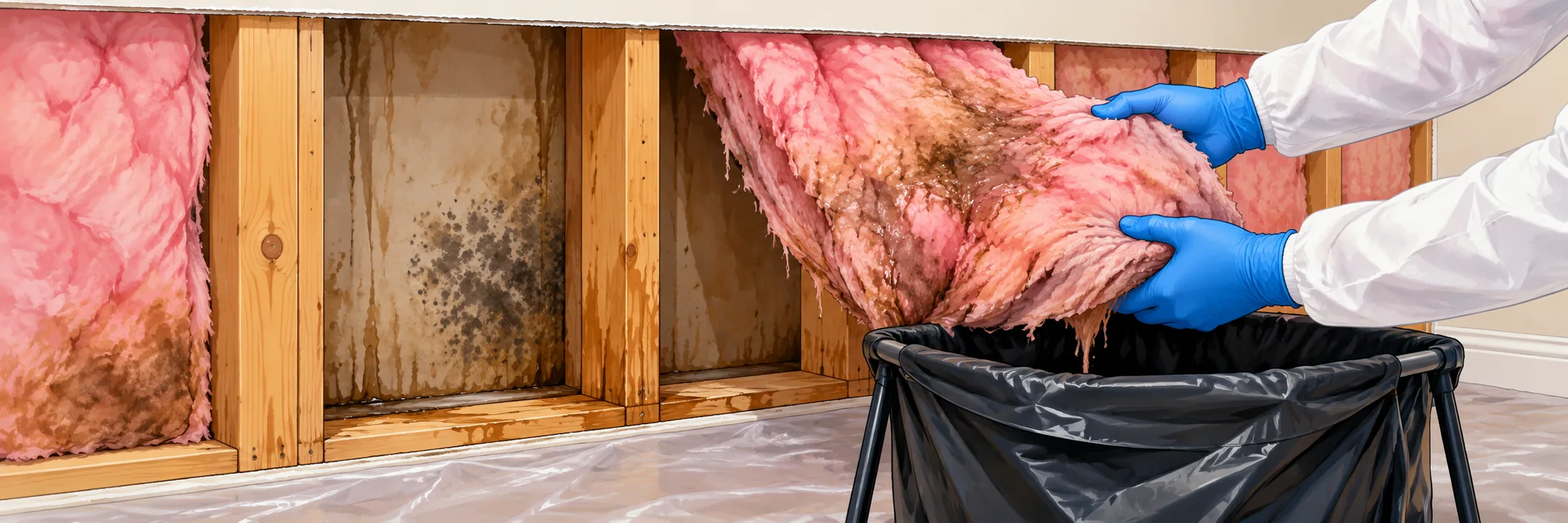
Affected porous material bagged and removed, framing and hard surfaces HEPA vacuumed and damp-wiped, then treated with an EPA-registered antimicrobial.
Fix the water, then dry it
The leak gets repaired and the assembly dried to a documented dry standard. Skip this step and the mold comes back. Every time.
Clearance testing & rebuild
Post-remediation verification by the assessor, then your certificate of mold damage remediation. Reconstruction starts only after clearance passes.
Who is legally allowed to do mold work in Texas
Texas licenses mold work through the Texas Department of Licensing and Regulation. Two separate licenses exist, and one company cannot hold both roles on the same project. If a contractor offers to test your home and then remediate it themselves, that is the single clearest sign to get a second opinion.
Mold Assessment Consultant (MAC)
Investigates, samples, writes the remediation protocol, and performs post-remediation verification. Independent of the remediator.
Mold Remediation Contractor (MRC)
Performs the containment, removal, cleaning and drying described in the protocol, and issues the certificate of mold damage remediation to the property owner.
The 25-contiguous-square-foot threshold is what triggers the licensed protocol requirement. Below it, a smaller-scope cleanup is permitted, but the moisture source still has to be corrected, and a hidden cavity is almost never as small as it looks from the room. Texas updated its mold law in 2025 (SB 1255, effective September 1, 2025): workers on a licensed project now need their own TDLR license or registration, and demolition of a structure after a fire or other disaster is excluded from the mold rules.
Our licenses & certifications
Definitions, in one line each
Remediation is returning mold to normal indoor levels and fixing the moisture. "Removal" implies zero spores, which no building has.
Containment is a sealed work area under negative pressure that keeps spores from spreading during removal.
HEPA filtration captures at least 99.97% of particles at 0.3 microns, the hardest size to trap. Mold spores are several times larger and are captured even more efficiently.
Clearance is the assessor's post-remediation verification that the area passes visual and sampling criteria.
Dry standard is the documented moisture content of unaffected like material in the same building, the target drying has to reach.
What mold remediation costs in DFW
Real ranges from jobs we've run in northeast Tarrant County. Assessment and clearance testing are billed separately by the independent assessor, typically $400–$1,200.
On a covered claim you generally pay your deductible, up to your policy's mold sublimit, commonly $5,000 to $10,000 on Texas homeowners policies. We write the scope in Xactimate, bill the carrier directly, and tell you before we start if the scope is likely to exceed the sublimit.
We work with your insurance company
We bill your insurer directly and send your adjuster the moisture and mold records. You pay your deductible. Hablamos español.
Don't see your insurer? We work with them too. Just ask.

DIY cleanup vs licensed remediation
EPA guidance supports homeowner cleanup under about 10 square feet on hard surfaces. Past that, the difference is containment.
Mold remediation FAQs
Do I need a mold assessment before remediation in Texas?+
Yes, if the project affects 25 contiguous square feet or more. Texas Department of Licensing and Regulation rules require an independently licensed Mold Assessment Consultant to write the remediation protocol and a separately licensed Mold Remediation Contractor to perform the work. The same company cannot legally do both on the same project.
How much does mold removal cost in the Dallas–Fort Worth area?+
Most residential mold remediation in DFW runs about $1,200 to $9,000. A single bathroom wall is usually $1,200–$2,500; a whole-room or HVAC-involved project is typically $2,500–$9,000. Cost is driven by affected square footage, containment complexity, and how much porous material has to be removed. Assessment and clearance testing are billed separately by the independent assessor.
Is black mold actually dangerous?+
The EPA and CDC don't treat color as a reliable indicator of risk, and don't recommend routine testing to identify species. Any indoor mold growth can trigger allergic and respiratory reactions, and sensitivity varies from person to person. The practical response is the same whatever the species: contain it, remove it, fix the water source.
Can I remove mold myself with bleach?+
For a patch smaller than about 10 square feet on a hard, non-porous surface, EPA guidance says a homeowner can clean it with detergent and water. Bleach doesn't reliably kill mold inside porous materials like drywall or wood, and scrubbing without containment aerosolizes spores into the rest of the house. Anything larger, anything inside a wall, or anything in the HVAC needs professional containment.
How long does mold remediation take?+
Typical remediation takes two to five days, plus one to three days for clearance results. Small single-wall projects are often done in a day. Reconstruction afterward ranges from a few days for drywall and paint to several weeks if cabinetry or flooring has to be replaced.
Does homeowners insurance cover mold remediation in Texas?+
It depends on the cause. Mold resulting from a sudden, covered water loss such as a burst supply line is often covered, frequently subject to a mold sublimit of $5,000–$10,000. Mold from long-term seepage, deferred maintenance or flood is typically excluded. Documenting the origin and timeline of the water is what determines the outcome, which is why the inspection report matters more than the estimate.
Do I need clearance testing after remediation?+
On any project that required a licensed protocol, yes. Passing post-remediation clearance by the independent assessor is what closes the file and allows the certificate of mold damage remediation, which Texas requires be given to the property owner, to be issued. It's also the document you'll hand a buyer or a carrier years later.
Does a musty smell always mean mold?+
A persistent musty or earthy smell almost always means active microbial growth on something wet, but not always visible mold. In North Texas the usual sources are a slow supply-line leak inside a wall, a failed shower pan, condensation on attic ductwork, and slab-edge moisture. A moisture inspection finds the source; the smell alone doesn't.
Will the mold come back after remediation?+
Not if the water source was corrected and the assembly was dried to a documented dry standard. Mold needs moisture, so regrowth in a remediated area means water is still getting in. That's why fixing the source is part of our scope rather than a recommendation on the last page of the report.
Not sure whether it's mold?
Text us a photo. A technician will tell you honestly whether it needs remediation, a moisture inspection, or nothing at all.
Mold remediation near you
Mold cleanup across every community we serve in northeast Tarrant and south Denton counties.
Written to be medically neutral; health effects vary by individual and this page is not medical advice. Reviewed by Jonathan Dempsey, owner and lead project manager, IICRC WRT · Published September 7, 2026 · Last reviewed October 16, 2026 · Cost ranges reflect our own DFW projects and are not a quote; every scope is priced after an on-site assessment.